A sloping garden can feel difficult to use, especially when rain washes soil onto paths, lawns sit at awkward angles, or one area is always muddy. The best garden retaining wall ideas do more than hold back earth. They create useful levels, improve drainage, define planting areas and give the whole garden a more finished appearance.
For gardens across Lanarkshire and Central Scotland, the right choice often comes down to ground conditions, the height of the wall, the style of the property and how you want to use the space afterwards. A small decorative border wall needs a very different approach from a structure supporting a raised patio or a steep bank.
Start with the job the retaining wall needs to do
Before choosing materials, decide whether the wall is primarily decorative, structural or both. A low wall around a flower bed may only need a firm base and sensible drainage. A wall retaining a large volume of soil, supporting paving, or sitting close to a driveway needs more careful groundwork and may require professional design.
Water is the main issue to plan for. Soil becomes much heavier when saturated, increasing pressure behind the wall. Good drainage, suitable foundations and proper backfilling are what keep a retaining wall stable over time. The finish matters, but the work below ground matters more.
It is also worth checking access before settling on a design. A narrow side entrance may influence whether large stone blocks, sleepers or poured concrete are practical. If excavation is needed, arranging groundwork, drainage and landscaping through one contractor can keep the project organised and avoid delays between trades.
12 best garden retaining wall ideas
1. Natural stone walls for a traditional garden
Natural stone gives a retaining wall real character and suits cottages, older properties and gardens with existing stone features. Sandstone and locally sympathetic stone colours can soften a sloping site without making it feel overly formal.
Stone costs more than basic blocks and takes longer to install properly, but it is a strong long-term option. Use it for visible walls around patios, terraces and seating areas where appearance is as important as support.
2. Block walls with a rendered finish
Concrete blockwork is a practical choice for a solid retaining structure. Once built on the correct foundation, it can be rendered in a clean neutral shade to suit modern fencing, paving or a rendered house exterior.
This is one of the more flexible garden retaining wall ideas because the finish can be changed later. Render does need to be applied well and maintained if it chips or cracks, particularly in exposed areas that see regular frost and rain.
3. Facing brick to match the house
A brick retaining wall can make a garden look planned rather than added in stages. Matching, or complementing, the bricks of the property creates a tidy link between the house, driveway and garden.
Brick is particularly effective for low terraced levels, raised planters and steps. For taller walls, the structural backing and drainage arrangement need to be right, rather than relying on the facing material alone.
4. Timber sleepers for relaxed, useful levels
Sleepers are popular where homeowners want a warm, natural look without the cost of stone. They work well for raised beds, vegetable areas and modest changes in level, and they can be paired with timber decking or fencing.
Pressure-treated timber is essential, but even quality sleepers have a shorter lifespan than masonry. They are best for lower retaining walls and garden features, not for holding back a deep bank or supporting a patio above.
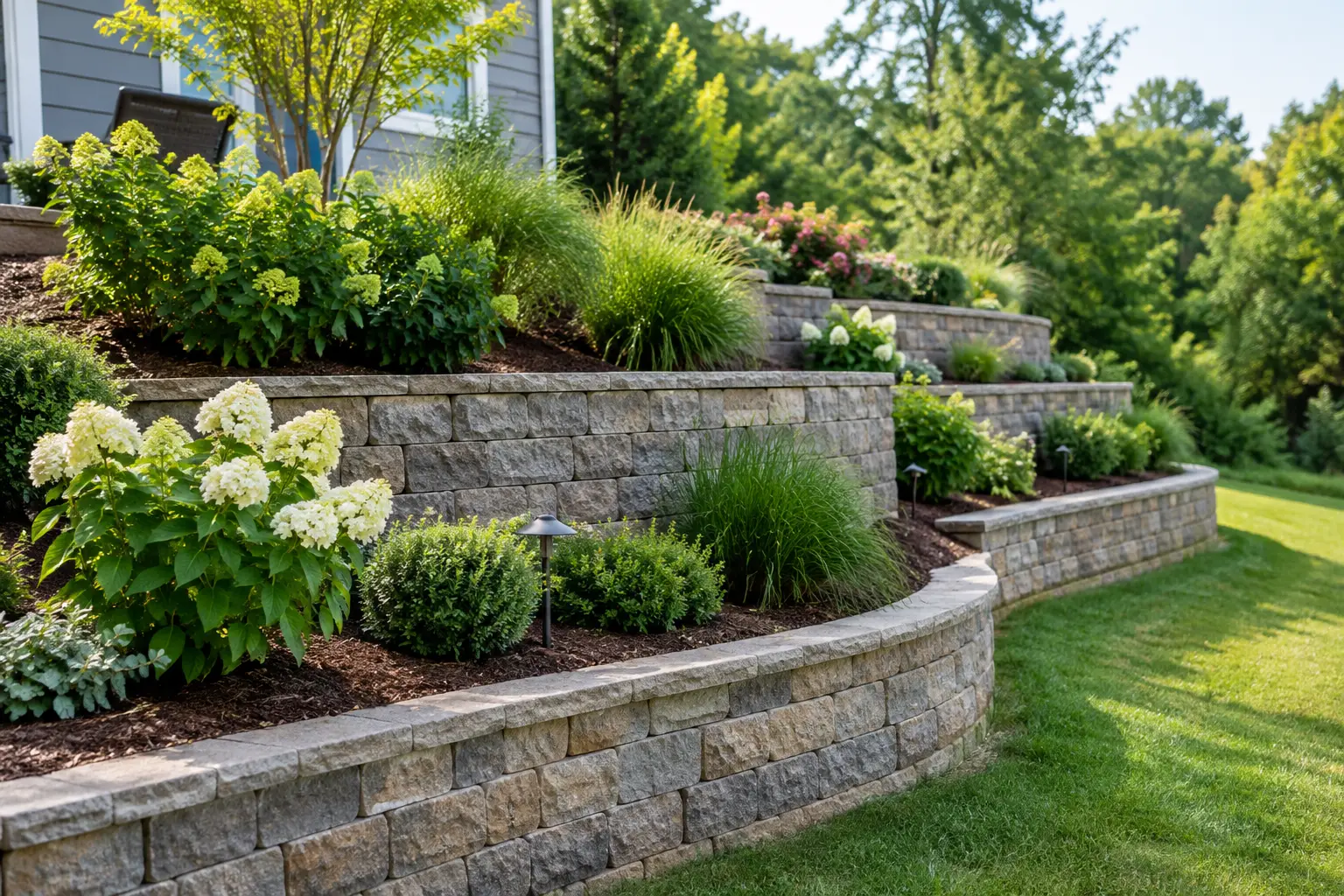
5. Tiered walls on a steep slope
One tall retaining wall can dominate a garden and place considerable pressure on a single structure. Splitting a steep slope into two or three lower levels is often more attractive and easier to use.
Each terrace can serve a purpose: a lower patio, a lawn area, a planting bed or a quiet seating corner. Tiered walls also give you more opportunities for planting, helping the structure blend into the garden rather than looking like a barrier.
6. Raised planters with built-in seating
A retaining wall does not need to be treated as dead space. A low wall can double as the edge of a raised planter and a useful place to sit, especially around a patio or fire-pit area.
A smooth stone coping, brick-on-edge finish or timber seat cap makes the wall more comfortable and protects the top surface. This works best when the wall is roughly seat height and the planting is kept low enough not to crowd the space.
7. Gabion baskets for a contemporary texture
Gabion walls use galvanised wire baskets filled with stone. They have a distinctive, contemporary appearance and can handle drainage well because water can pass through the stone fill.
They suit larger gardens, commercial sites and modern landscape schemes, but can feel too industrial in a small enclosed garden. The baskets must be correctly specified and securely installed, particularly where height or ground pressure is involved.
8. Curved retaining walls to soften hard landscaping
Straight walls are efficient, but a gentle curve can make a patio or lawn feel more natural. Curved retaining walls are especially useful when following the shape of a path, a circular seating area or a winding border.
This detail tends to cost more in labour and materials, as cuts and laying take longer. The result can be worthwhile where the garden layout needs to feel less square or where a curved wall improves movement through the space.
9. Split-face blocks for a stone-effect finish
Split-face concrete blocks provide texture similar to natural stone at a more controlled cost. They are available in several colours and can create a neat, durable finish around steps, patios and raised borders.
They are a sensible middle ground for homeowners who want more visual interest than plain render but do not need the variation and expense of natural stone. Choose a colour that works with existing paving, fence panels and the property exterior.
10. Retaining walls with integrated steps
If a wall separates two levels, building steps into the design is usually safer and more convenient than taking a long route around it. Wide, shallow steps make a garden easier to use for children, visitors and anyone carrying pots or garden equipment.
The materials should match or complement the wall. Stone steps beside a stone-faced wall, or paving that continues from a patio onto the treads, creates a more considered finish. Good edge restraint and drainage will help stop movement over time.
11. Green retaining walls with trailing planting
Planting can soften the look of block, stone or sleeper walls. Trailing plants over a coping edge, low shrubs on upper levels and ground-cover plants around the base reduce the hard lines and bring colour through the seasons.
Leave enough planting depth behind the wall and avoid allowing vigorous roots to damage joints or drainage outlets. This approach is most effective when the planting scheme is planned alongside the wall, rather than added as an afterthought.
12. A retaining wall that frames a new patio
For many gardens, the most valuable use of a retaining wall is creating a level patio where there was previously an unusable slope. The wall can support the raised edge of the patio, contain the sub-base and form a clean boundary for lawn or borders below.
This type of project needs careful excavation, compacted foundations and a proper route for surface water. It is not simply a matter of laying slabs behind a wall. When completed correctly, though, it can turn a difficult garden into a practical space for dining, relaxing and entertaining.
Drainage and foundations are not optional
Retaining wall failures are rarely caused by the visible finish alone. Poor foundations, no drainage provision and inadequate backfill are common reasons for leaning, cracking or bulging walls.
A well-built wall usually needs a stable base suited to the soil and wall height, free-draining aggregate behind it and a way for water to escape. Depending on the design, this may include drainage stone, perforated pipework and weep holes. The exact method depends on the site, so it should be assessed before excavation begins.
For taller walls, walls near a boundary, or structures supporting vehicles, buildings or raised paving, professional advice is particularly worthwhile. Local planning rules and building standards can also apply in certain situations. Getting this checked at the start is far less costly than rebuilding a wall that has moved after a wet winter.
Choose a finish that suits how you live
The best material is not always the most expensive one. A small family garden may benefit most from a simple rendered block wall with broad steps and durable paving. A period property may suit natural stone and planting, while a rental property may call for a tidy, hard-wearing solution that is easy to maintain.
Think about future maintenance as well as the installation price. Timber may need replacing sooner, render can need occasional repair, and natural stone generally ages well but costs more at the outset. A good design balances appearance, budget, access and the amount of support the ground actually needs.
A retaining wall should make the garden easier to enjoy, not simply contain a slope. With sound groundwork and a design that fits the property, even an awkward change in level can become the feature that gives the garden its shape and purpose. For a planned garden transformation, North Lanarkshire Garden Care can assess the site and provide a clear, practical quotation for the work required.