An overgrown hedge can take more than its fair share of a garden. It blocks light, crowds patios and paths, weakens old fencing, and leaves little room for the lawn, planting or driveway improvements you actually want. The best hedge removal methods depend on the hedge’s size, root system, access to the garden and what is planned for the space afterwards.
Removing a small, shallow-rooted hedge can be manageable with the right tools and plenty of care. A mature conifer hedge, established laurel or long boundary hedge is another matter. These often have dense roots, heavy trunks and a surprising amount of green waste to clear. Choosing the right approach at the start helps prevent damage to surrounding ground and avoids paying twice for work that should have been done properly first time.
Start by deciding how much needs removed
There is a major difference between reducing a hedge, cutting it down, removing the stump, and fully clearing the roots. A hedge cut close to ground level may look gone, but many species will regrow from the base. The remaining stumps can also make it difficult to install a fence, lay a patio, prepare a driveway or level the garden.
If the area is simply being covered with bark or left undisturbed, cutting the hedge down and treating or managing the stumps may be enough. If the space is being turned into a lawn, planted border, paved area or new boundary line, full root removal is usually the better long-term choice.
Before any work begins, check where the boundary lies and whether the hedge belongs solely to your property. It is also sensible to identify drains, cables, water pipes and nearby structures. Roots may extend further than expected, especially with older hedges.
The best hedge removal methods explained
1. Cut down and remove by hand
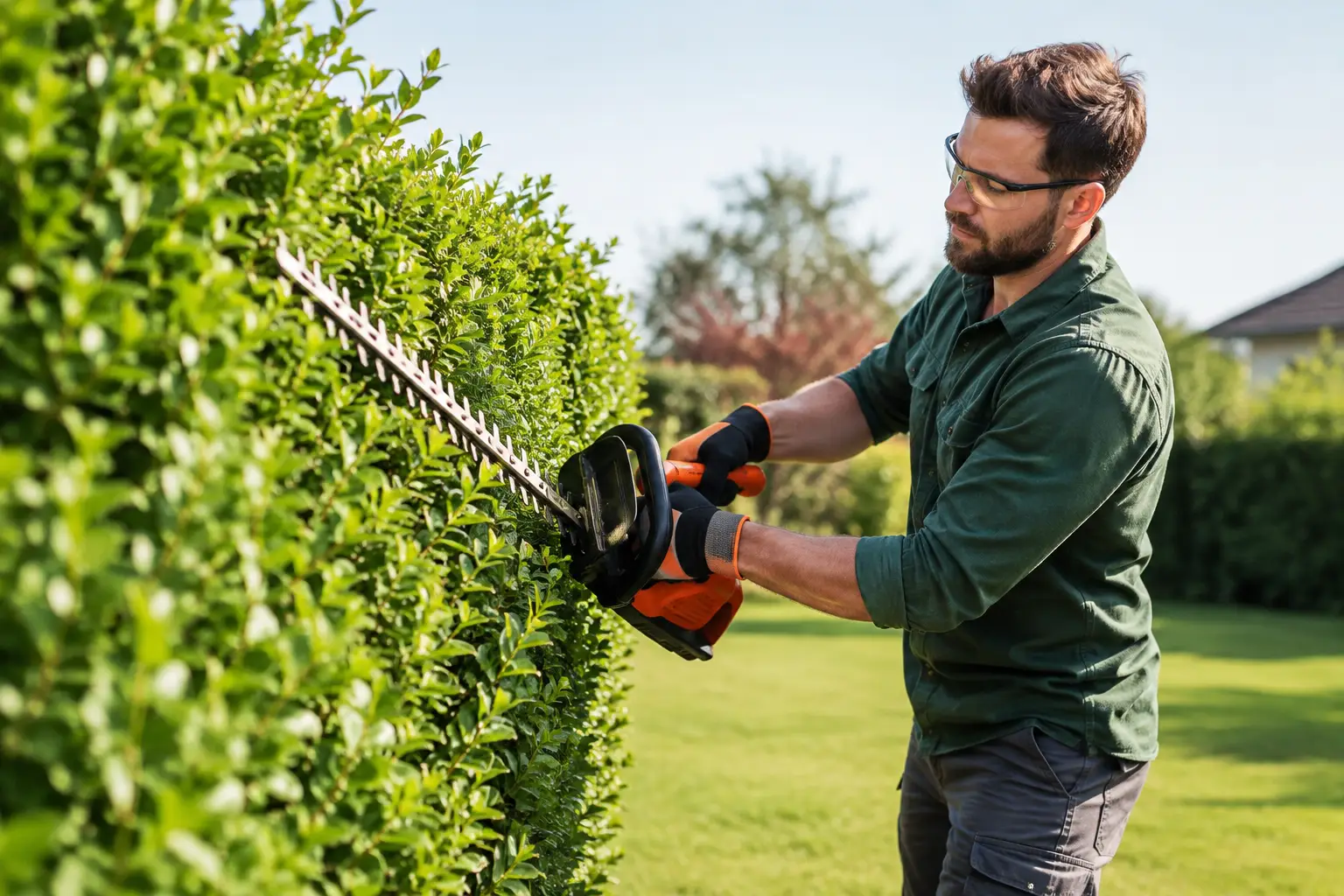
For a short hedge with thin stems, manual removal is the most straightforward option. The hedge is cut back in sections using suitable pruning and cutting equipment, leaving manageable lengths that can be moved safely. The stumps and roots are then dug out with a spade, mattock and pruning saw.
This method keeps disruption low and offers good control around garden features. It works well for young privet, small shrubs and short stretches of hedge where access for machinery is restricted. The drawback is time and physical effort. Roots can be tightly woven together, and the job becomes demanding very quickly once trunks are thicker or the hedge line is long.
2. Dig out stumps and roots
Digging is often the best approach where the goal is a clean planting area. After the hedge has been cut down, soil is carefully removed from around each stump. Main roots are cut as they are exposed, then the stump is lifted free.
It is important not to rush this stage. Pulling hard on an incompletely released stump can disturb more soil than necessary and can damage nearby paving, edging or fence posts. Once the roots are out, the excavated area should be backfilled with suitable topsoil and levelled. This gives a better base for turf, planting or future landscaping work.
3. Use a winch for stubborn stumps
A hand-operated or vehicle-mounted winch can help remove stumps that are too heavy to lift manually. This can be effective where there is a secure anchor point, clear working space and the main roots have already been cut back.
A winch is not a shortcut for preparation. Attempting to pull out a large stump without releasing the roots can strain equipment, tear up large sections of lawn and create a safety risk. It should also never be attached to a fence, small tree, drain cover or any feature not designed to take that load. For domestic gardens, this method is best left to experienced operatives when the hedge is well established.
4. Use a mini excavator for full clearance
For mature hedges, long runs of conifers or sites being prepared for larger work, a mini excavator is often the most efficient option. It can lift whole root balls, break through compacted ground and move large volumes of waste without relying on manual labour alone.
Machine clearance is particularly useful before fencing, paving, drainage or driveway installation. It gives a clearer working area and makes it easier to achieve the correct levels afterwards. However, access matters. A machine needs enough width to enter safely, and wet ground or narrow gardens may require a different plan. Skilled operation is essential near buildings, boundary walls and underground services.
5. Grind the stumps below ground level
Stump grinding uses a specialised machine to reduce the stump into wood chips below the soil surface. It is a useful option where the hedge has already been removed and the priority is getting rid of visible stumps without major excavation.
Grinding is less disruptive than pulling out every root, but it does not remove the full root network. This is usually fine for a lawn or decorative border, provided the species is unlikely to regrow. It may not be suitable before laying foundations, constructing a driveway, or installing fencing directly through the former hedge line. In those cases, roots and soft ground can cause problems later.
6. Treat stumps where regrowth is likely
Some hedges, including certain broadleaf varieties, can send up new shoots after being cut down. A professional stump treatment can prevent this, but it should be used carefully and only when appropriate for the site.
Chemical treatment is not an instant removal method. The stump and roots remain in place while they break down over time, which may take years. It is therefore better suited to areas where there is no immediate construction or planting planned. Care is also needed near lawns, trees, ponds, drains and neighbouring gardens. Physical removal remains the cleaner option for a complete garden transformation.
7. Arrange professional hedge clearance and waste removal
The last part of hedge removal is often underestimated. A dense hedge creates a substantial volume of branches, trunks, roots and soil. Cutting it down is only half the job if the waste is left stacked at the side of the property.
Professional clearance covers the cutting, root removal, loading and responsible disposal of green waste. It also means the ground can be prepared for the next stage, whether that is turfing, fencing, artificial grass, paving or a new driveway. For commercial sites and landlords, this approach is especially useful when the garden needs to be left tidy and ready for use without delays.
Choosing the right method for your garden
The size and type of hedge should guide the decision. Small ornamental hedges are often suitable for hand removal. Dense leylandii, mature laurel and old mixed boundary hedges normally need more powerful equipment and a planned clearance process.
Think about what comes next as well. If you are replacing the hedge with a new fence, leaving roots in the ground can make post placement difficult. If a patio or monoblock driveway is planned, the area may need excavation, levelling and a properly prepared sub-base after clearance. Removing roots at the same time is normally more cost-effective than returning later to deal with uneven ground or regrowth.
Access is another practical factor. Rear gardens in Coatbridge and across North Lanarkshire can have narrow side passages, steps or shared access, which affects what machinery can be used. A site visit allows the work to be planned around these restrictions rather than relying on a one-size-fits-all solution.
Safety, wildlife and timing
Hedge removal involves sharp tools, unstable cut material and heavy roots. Thick branches can shift unexpectedly, while stumps may be heavier than they appear. Personal protective equipment, controlled cutting techniques and a clear work area are essential.
Check for nesting birds before cutting or clearing any hedge. Avoid disturbing active nests and plan works for a suitable time of year where possible. If a hedge provides privacy or acts as a boundary, make arrangements for temporary screening or fencing before it is removed.
A properly cleared hedge line is not just a tidier view. It is a chance to make the garden work harder for your property, whether that means more usable space, a stronger boundary or a clean base for a new outdoor project. North Lanarkshire Garden Care can assess the hedge, access and future plans together, then provide a practical clearance solution that leaves the site ready for what comes next.