A puddle that remains on a lawn long after the rain has stopped is rarely just a nuisance. Water can soften ground, stain paving, damage turf and find its way towards walls, garages or driveways. Timely Airdrie drainage repair deals with the cause of the problem rather than repeatedly clearing the surface water and hoping for a dry spell.
For homes, rental properties and commercial sites, drainage needs to work quietly in the background. When it does not, the effects can spread quickly. A properly planned repair can protect the usable space in your garden, improve access around the property and prevent a much larger groundwork job later on.
When drainage problems need attention
Some drainage faults are obvious, such as a blocked gully overflowing beside a driveway. Others develop gradually and are easier to overlook. If one part of a garden is always boggy, paving has started to sink, or water runs towards the building after heavy rain, it is worth arranging an inspection.
A musty smell around an outside drain, slow-draining gullies and patches of moss where water regularly sits can also point to a problem below ground. On sloping sites, rainwater may be travelling from a higher part of the garden and collecting against a patio, fence line or property boundary. The visible water is only the result. The route it takes, the fall of the ground and the condition of the drainage system all need to be considered.
It is tempting to add a little gravel, lift a drain cover or fill a low spot with topsoil. These measures may improve the appearance for a short time, but they do not resolve damaged pipework, a blocked outlet or poor levels across the site. In fact, adding soil to a lawn can make surface water worse if it reduces the ground’s natural fall away from the house.
What causes poor drainage in Airdrie gardens?
Drainage problems are not always caused by one dramatic failure. Compacted soil is common in busy gardens, particularly where machinery, foot traffic or parked vehicles have pressed down the ground over time. Clay-heavy soil can also hold water near the surface, while old garden drainage may have shifted, collapsed or filled with silt.
Hard landscaping can change how a site handles rainwater. A new patio or driveway should be laid with suitable falls so water is directed towards an appropriate drainage point, not towards the property. Where paving has been installed without enough preparation beneath it, slabs and blocks can settle unevenly, creating low areas where water gathers.
Leaves, soil and garden debris can block gullies and channels, especially after autumn and winter storms. Tree roots are another possible cause, as they can enter joints in older pipework and restrict water flow. The right answer depends on what is happening below the surface. Clearing a blockage may be enough in one garden, while another requires new drainage runs, channel drains or ground regrading.
Airdrie drainage repair begins with the ground levels
A reliable repair starts with a clear assessment of the affected area. The aim is to establish where the water is coming from, where it is collecting and where it can safely discharge. This means looking at existing drains and gullies, the slope of paths and paving, soil conditions, nearby walls and the location of buildings.
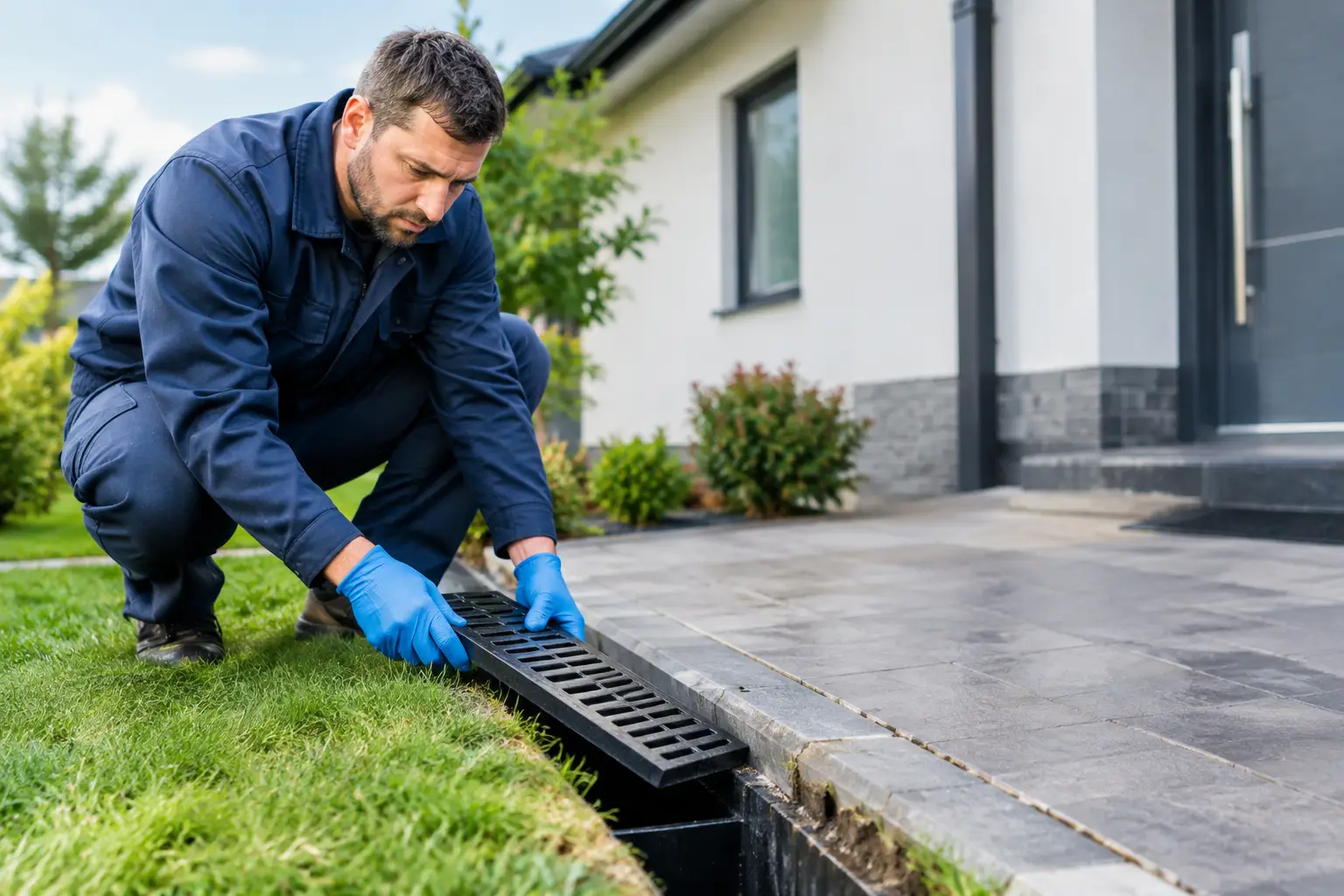
For a small localised issue, excavation may reveal a cracked section of pipe, loose connection or drain that has become packed with debris. Replacing the damaged section and restoring the surrounding ground can provide a lasting fix. Where water repeatedly crosses a driveway or gathers at a doorway, a channel drain may be a practical choice. It intercepts surface water before it reaches the area that needs protecting.
A French drain can be useful where a lawn or border is holding water. This usually involves a gravel-filled trench with perforated pipework that collects water from the soil and carries it towards a suitable outlet. It is not suitable for every site, however. The available fall, soil type and discharge point must all be right for it to work as intended.
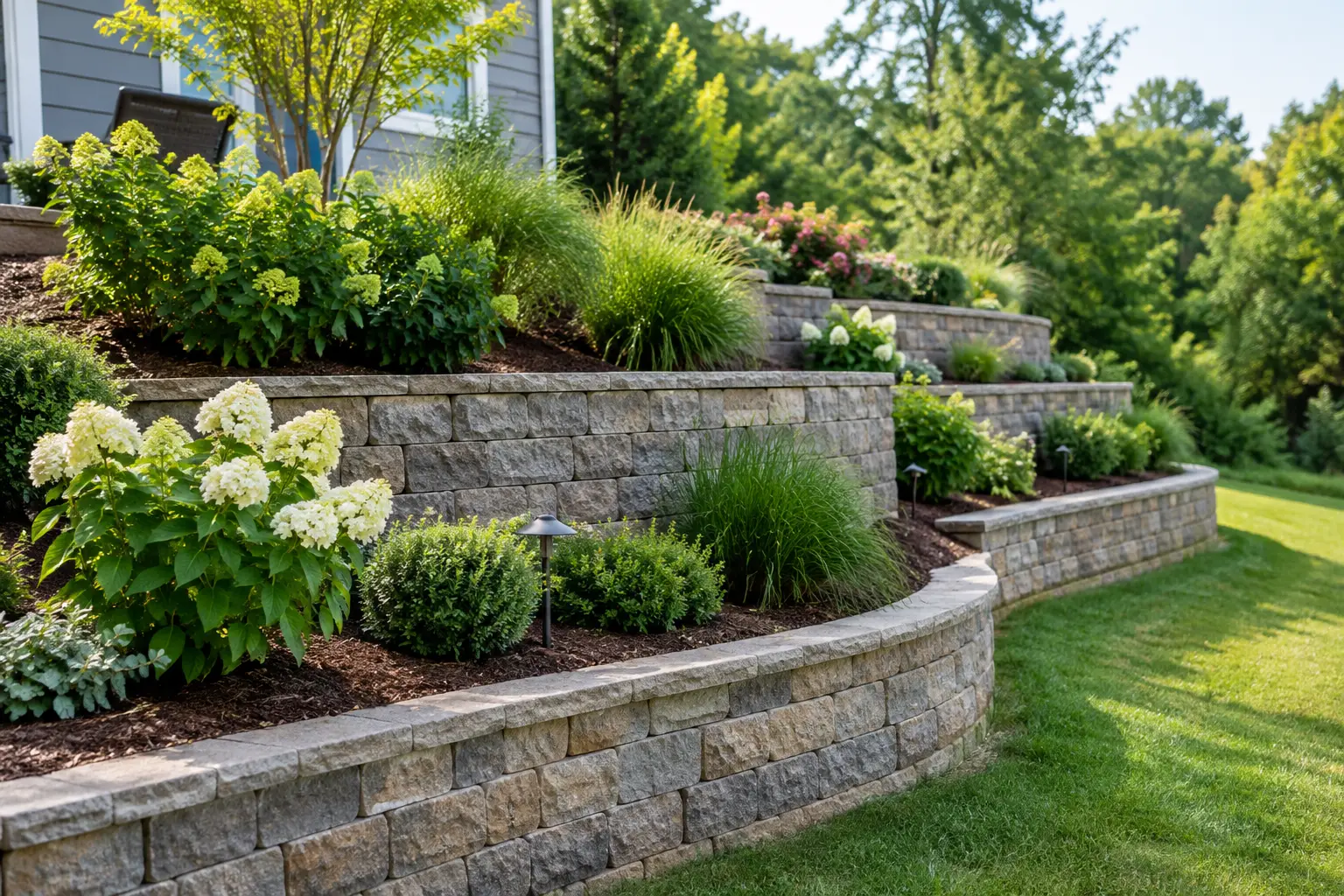
On gardens with poor overall levels, regrading may be the better long-term solution. Soil is carefully removed or redistributed to create a controlled fall away from the house and towards drainage provision. This can be combined with new turf, edging, paving or a replacement patio, making it a sensible time to improve the whole outdoor area rather than disturb it twice.
Why surface water should not be ignored
Standing water can make a garden difficult to use, but the risks go beyond a muddy lawn. Saturated soil loses strength, which can affect the base beneath paving, paths and driveways. Over time, this can lead to movement, cracking and uneven surfaces that become a trip hazard.
Water sitting near walls can contribute to damp issues, particularly where ground levels are already too high or drainage is poor around the building. It may also shorten the life of fencing posts, soften planting beds and wash loose material onto paving. For landlords and commercial property owners, slippery access routes and overflowing gullies can become an avoidable maintenance and safety concern.
Acting early is often more affordable than waiting for visible damage. A straightforward repair to an existing drain is very different from lifting a failed patio, rebuilding a driveway base or dealing with water that has repeatedly reached the property.
Choosing the right repair for your property
There is no single drainage product that suits every garden. The best solution depends on the source of the water and how the area is used. A narrow path beside a house may need a discreet channel drain, while a large soft-ground area may benefit from land drainage and improved levels. A blocked gully might only need cleaning and repair, provided the pipework and outlet remain sound.
The finish matters as much as the pipework. Excavation can be disruptive if it is poorly planned, particularly around established lawns, patios and driveways. A professional contractor should explain the proposed work, protect the surrounding area where possible, remove waste responsibly and reinstate the surface to a tidy standard.
North Lanarkshire Garden Care can manage drainage work alongside excavation, paving, turfing and driveway improvements. This is useful when drainage is part of a wider outdoor project, as the ground preparation and finished surfaces can be planned together rather than treated as separate jobs.
Simple checks that help prevent repeat issues
Regular maintenance will not solve every drainage fault, but it can prevent minor blockages becoming major problems. Keep gully grates clear of leaves, soil and loose gravel, especially during autumn. Check that downpipes discharge into a working drain or suitable surface water system rather than directly onto a path or against the property.
Avoid piling soil, bark or decorative stone over drainage covers. Covers need to remain accessible for inspection and cleaning. If you notice water beginning to gather in a familiar spot, take note of when it happens. Is it only after prolonged rain, whenever a downpipe is running, or after water is used from a particular outside tap? These details can help identify the cause.
Be cautious before laying new artificial grass, paving or a driveway over an area with existing water problems. Covering the surface without addressing drainage can trap the issue underneath and lead to movement later. Good groundwork should always come before the final finish.
A garden or driveway should cope with Scottish weather without becoming unusable every time rain arrives. If water is lingering, drains are overflowing or surfaces are starting to move, a site assessment can give you a clear, practical route forward and help keep your outdoor space dry, safe and ready to use.