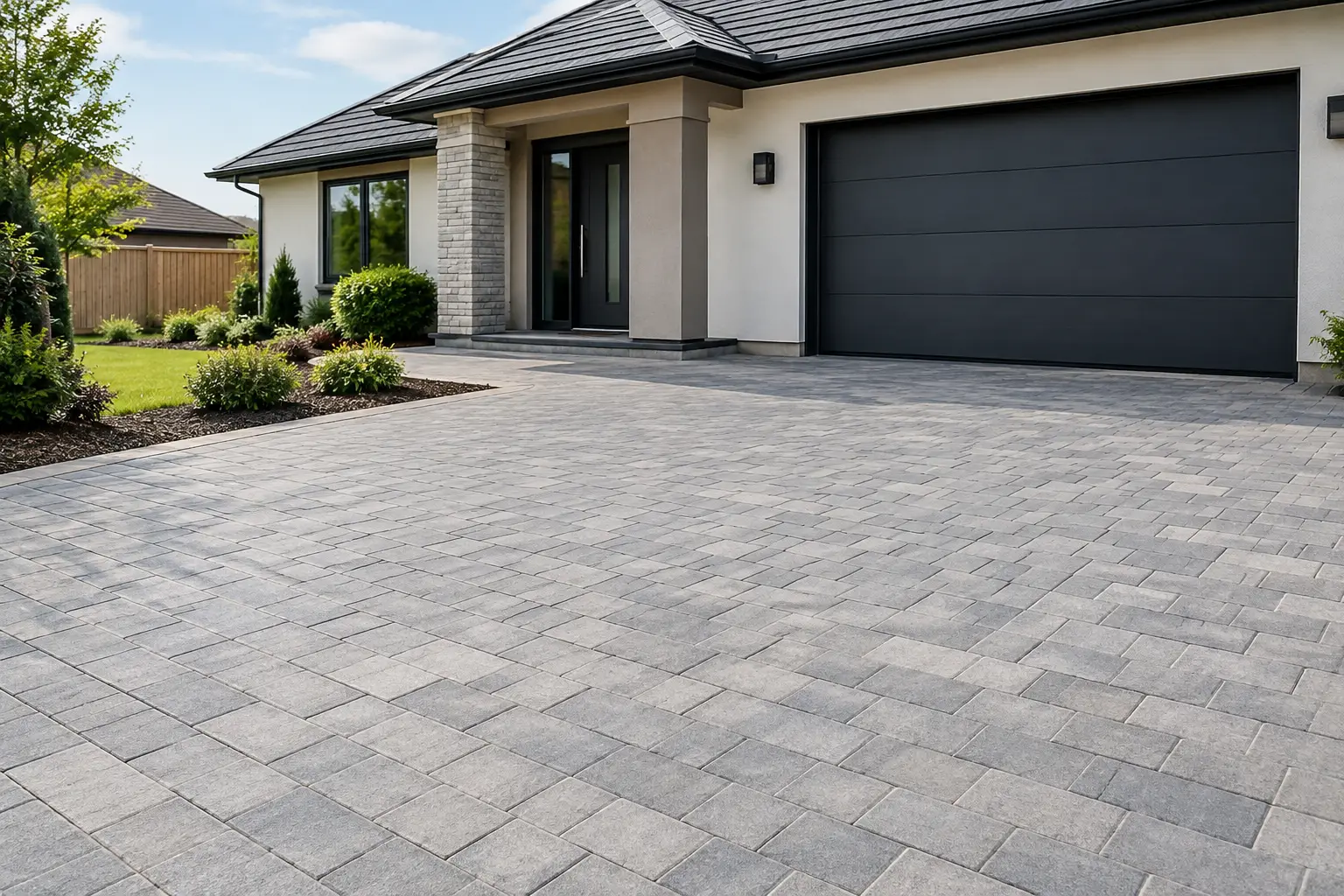
A tired, cracked driveway can make an otherwise well-kept property look neglected. It can also create puddles by the door, loose edges, awkward parking and ongoing repair costs. Airdrie monoblock driveways offer a practical way to replace worn concrete, broken tarmac or uneven gravel with a clean, durable surface that suits the property and stands up to daily use.
Monoblock is popular because it combines strength with choice. The blocks are available in a range of colours, sizes and laying patterns, allowing a driveway to look traditional, modern or somewhere in between. The finished appearance matters, but the groundwork underneath matters even more. A driveway is only as reliable as its base, drainage and edge restraints.
Why choose an Airdrie monoblock driveway?
A properly installed monoblock driveway gives a property a clear, usable parking area while improving kerb appeal. Unlike a single poured surface, block paving is made from individual units. This gives more flexibility in design and can make localised repairs simpler if a section is damaged in the future.
For many homes, monoblock works particularly well on sloping, irregular or awkwardly shaped front gardens. Blocks can be cut neatly around paths, steps, walls, drainage covers and planting areas. It is also possible to add a contrasting border, parking bays or a path to the front door without making the space feel disconnected.
There are trade-offs. Monoblock usually requires more preparation and installation time than laying a basic tarmac surface, particularly where excavation, drainage or retaining work is required. It also needs routine care to keep it looking its best. However, when the foundations are prepared correctly, it is a long-lasting choice that offers a more detailed and tailored finish.
The groundwork that makes monoblock last
The visible blocks are the final layer of a driveway build, not the starting point. Skipping groundwork to save money can lead to sinking, rocking blocks, standing water and uneven lines within a short period. A professional installation begins by assessing the existing ground, access, levels and where surface water will go.
Excavation and a stable sub-base
The old surface and unsuitable soil need to be excavated to the correct depth. The required depth depends on the ground conditions, driveway size and expected vehicle use. A driveway for everyday family cars has different demands from an area used regularly by vans or heavier commercial vehicles.
A compacted aggregate sub-base is then installed in layers. This spreads vehicle loads and helps prevent the finished driveway from moving or dipping. The base must be levelled and compacted properly, including around the edges where failure often starts. A membrane may also be needed where the soil is soft, helping separate the sub-base from the ground beneath.
Drainage planned before the blocks are laid
Water should never be treated as an afterthought. Driveways need a controlled fall so rainwater moves away from buildings and does not settle in low points. Depending on the site, this may involve channel drains, permeable paving, soakaways or directing water to a suitable drainage point.
The right solution depends on the layout and local ground conditions. In many cases, surface water cannot simply be allowed to run from a new driveway onto the pavement or road. Good drainage protects the driveway, helps prevent damp issues near the property and keeps the entrance safer during wet weather.
Strong edge restraints and a level laying course
Kerbs or edge restraints hold the paving in place. Without them, blocks at the perimeter can gradually spread under the weight of vehicles, leaving gaps and instability. Once the sub-base and edging are secure, a carefully levelled laying course provides the bed for the blocks.
Each block is laid to the chosen pattern, cut accurately where needed and compacted into place. Jointing sand is brushed into the gaps to help lock the surface together. The aim is not just a driveway that looks straight when completed, but one that remains firm after seasons of rain, frost and regular use.
Choosing the right blocks and layout
The best monoblock driveway design is one that suits the property rather than following a short-lived trend. A traditional house may look better with warm, muted tones and a simple stretcher bond pattern. A newer property can suit charcoal, grey or mixed-colour blocks with crisp contrasting edges.
Smaller blocks and more intricate patterns can create a distinctive result, although they involve more cutting and labour. Larger-format blocks can give a cleaner, more contemporary look and may make a compact front garden feel less busy. A border in a darker or lighter shade can define the driveway and tie it into existing fencing, brickwork or garden paving.
It is worth considering how the space will be used before finalising the design. If cars need to turn or reverse out, the layout should leave enough manoeuvring room. If bins are stored at the side of the house, a practical access strip can be built in. Where a front garden is being reduced to create parking, retaining a small planting bed or defined path can stop the area from becoming a featureless hard surface.
Permeable monoblock or standard block paving?
Permeable block paving is designed to let water pass through the joints and into a specially constructed sub-base below. It can be a sensible option where drainage is limited, or where managing rainwater on the property is preferable. The installation method is different from standard monoblock, so the base materials and drainage design must be selected correctly from the outset.
Standard blocks can still perform very well when they are laid with suitable falls and drainage channels. The better option depends on the property, soil, levels and the available route for water. This is why a site visit is more useful than choosing a driveway solution from photographs alone.
Preparing for an installation
Before work begins, it helps to decide what needs to stay and what needs to go. Existing shrubs, turf, old paving, walls and gates may need removed or altered to create the required width and levels. If utilities, inspection covers or cables run through the area, these should be identified early so they can be protected or incorporated neatly into the finished surface.
Access for machinery and aggregate deliveries also needs consideration. A driveway installation often involves excavation equipment, skips and lorries bringing in stone, sand and blocks. An experienced contractor will plan the work to keep disruption manageable, protect surrounding areas where possible and leave the site tidy at the end of the job.
If the driveway is part of a wider outdoor improvement, it is often more cost-effective to coordinate the work. New fencing, a front path, turfing, drainage or a patio can be planned alongside the driveway so levels, materials and access all work together. North Lanarkshire Garden Care can manage these connected elements as one organised project rather than leaving homeowners to arrange separate trades.
Looking after a monoblock driveway
A monoblock driveway does not need complicated maintenance, but a little care goes a long way. Sweep away leaves and soil regularly, particularly in autumn, as built-up debris holds moisture and encourages moss. Treat weeds as they appear rather than allowing roots to become established in the joints.
Pressure washing can refresh the surface, but it should be done carefully. Excessive pressure or getting too close to the joints can remove jointing sand and loosen the finish. After cleaning, fresh kiln-dried sand may be needed to refill the joints and keep the blocks interlocked.
Oil spills should be dealt with promptly using a suitable cleaner, as staining becomes harder to remove once it has soaked in. If a block is damaged, one of the advantages of monoblock is that individual units can often be lifted and replaced without rebuilding the whole driveway. Settlement or recurring puddles, however, should be investigated rather than simply covered over, as they may point to an issue below the surface.
Get the details right from the start
The difference between an average driveway and one that performs for years is rarely just the colour of the blocks. It is the excavation depth, compacted sub-base, drainage falls, secure edges and care taken around every cut and finish. Those details are what prevent a smart new entrance from becoming a repair job.
For homeowners in Airdrie considering a new monoblock driveway, start with a clear plan for parking, drainage and the wider look of the front garden. A free, detailed quote based on the actual site will give you a more reliable route to a driveway that looks right on day one and stays dependable long after the work is complete.