A driveway has to cope with far more than daily parking. In Central Scotland, it also faces heavy rain, frost, tyre marks, oil drips and the occasional delivery lorry. The best driveway surface options are therefore not simply the ones that look good on installation day. They are the materials that suit your property, budget, drainage needs and the amount of maintenance you are prepared to take on.
A well-built driveway can improve kerb appeal, provide safer parking and make a property easier to manage. However, even the best finish will disappoint if the ground beneath it has not been excavated, levelled and drained correctly. Choosing the surface is important, but choosing the right groundwork is what gives it a proper lifespan.
What makes a good driveway surface?
Before comparing finishes, consider how the driveway will be used. A single-car area outside a quiet home has different requirements from a wide entrance serving several vehicles, a rental property or commercial premises. The weight of vehicles, turning movements and the slope of the ground all affect the most suitable choice.
Drainage is especially important. Surface water should not run towards the house, garage or neighbouring land. A driveway may need falls, drainage channels, soakaways or a permeable surface to manage rainwater properly. This should be planned before installation rather than added as an afterthought.
You should also consider how the driveway sits alongside paths, fencing, turf, garden walls and existing paving. A surface that complements the property can make the whole front garden feel more finished, while a mismatched material can draw attention for the wrong reasons.
Best driveway surface options compared
Monoblock paving
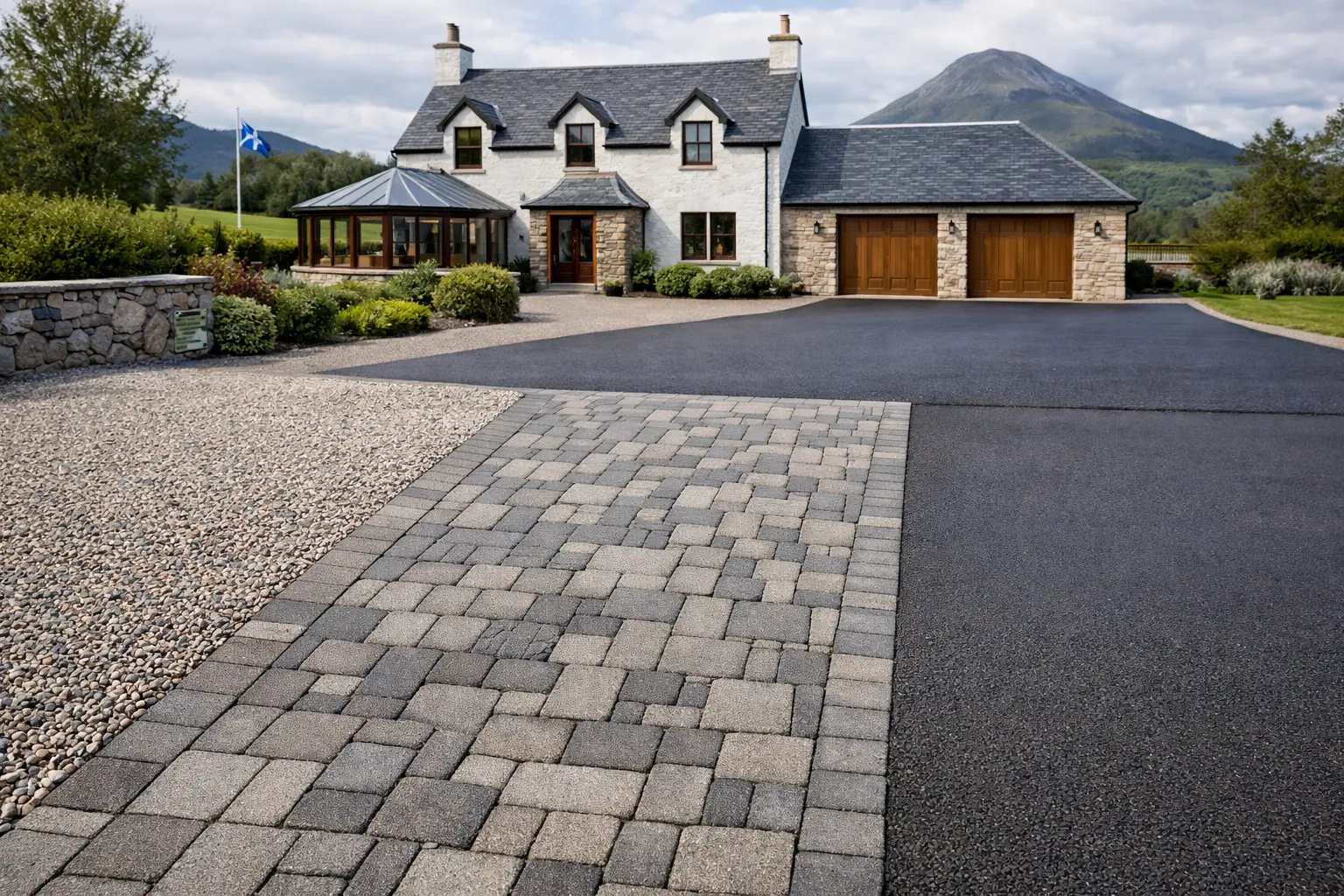
Monoblock remains one of the most popular driveway choices for homeowners because it balances appearance, durability and flexibility. Individual concrete blocks are laid in patterns such as herringbone, basket weave or stretcher bond, with a wide choice of colours, borders and edging details.
A properly installed monoblock driveway is strong enough for regular vehicle use and can be designed to suit both traditional and modern homes. Herringbone patterns are particularly useful in parking areas because the interlocking blocks handle vehicle movement well.
The main advantage is repairability. If a small area is damaged or needs to be lifted for access to services, individual blocks can often be replaced without redoing the full driveway. The trade-off is that joints can collect moss and weeds over time, particularly in shaded areas. Regular brushing, occasional cleaning and topping up jointing sand will keep it looking its best.
Monoblock needs a solid, well-compacted base. When the foundation is too shallow or poorly prepared, blocks can sink, spread or develop uneven areas. This is why the ground preparation should never be treated as the place to cut corners.
Tarmac
Tarmac is a practical, tidy option for driveways that need a clean finish without the visual detail of block paving. It is often a strong choice for larger driveways, shared access roads and properties where vehicles move in and out frequently.
Its smooth dark surface works well with block-paved edging, kerbs or decorative borders, giving a straightforward driveway a more defined appearance. Tarmac can also be installed relatively quickly once the base is ready, which makes it attractive for projects where access needs to be restored promptly.
The finish does need proper edging and drainage. Without strong edges, tarmac can crack or break away at the sides over time. Standing water can also shorten its life, especially where frost gets into small surface defects. It is less easy to repair invisibly than monoblock, but a correctly laid tarmac driveway can provide many years of reliable use.
Gravel
Gravel is one of the more affordable driveway surfaces and suits rural, traditional and larger properties particularly well. It has a natural appearance, comes in a range of stone sizes and colours, and can be used to create a softer contrast against lawns, planting and stone-built homes.
Because rainwater can filter through gravel, it can be a useful option where drainage is a concern. It also gives an audible warning when someone arrives, which some homeowners value. The material itself is generally economical, although a proper sub-base and edging are still required.
There are practical compromises. Loose gravel can migrate onto pavements and roads, stick in tyre treads and need raking back into place. It may be less suitable for steep slopes, wheelchair access, pushchairs or households where a very clean, level finish is preferred. Gravel grids can help hold the stone in place and reduce rutting in busy areas.
Resin-bound surfaces
Resin-bound driveways combine decorative aggregate with resin to create a smooth, hard-wearing, permeable finish. The stones are mixed with resin before being laid, leaving small gaps that allow water to drain through the surface when installed over a suitable permeable base.
This option provides a smart, contemporary appearance with no loose stones to scatter. It is comfortable to walk on, works well around paths and entrances, and is available in a variety of aggregate blends. For homeowners looking for a low-maintenance decorative finish, it can be an excellent choice.
Resin-bound surfacing is not the cheapest route, and the quality of installation matters greatly. The base must be stable, clean and correctly prepared, while weather conditions during laying need to be suitable. A poor base may still crack beneath an otherwise attractive resin surface. Ask how the existing ground will be assessed and what preparation is included in the quote.
Concrete
Concrete offers a durable, solid driveway surface and can be finished in a plain brushed style, coloured, patterned or imprinted. It can suit properties where strength and low day-to-day maintenance are the priorities.
A concrete driveway does not shift like loose gravel and does not have paving joints that need weed control. However, it is less forgiving if movement occurs below the surface. Cracks can be difficult to disguise, and repairs may remain visible. Expansion joints, correct thickness and good drainage are essential.
For some homes, plain concrete can look too industrial unless it is softened with borders, planting or decorative finishes. It is often better suited to practical side areas, garages and larger hardstanding spaces than to a highly decorative front entrance.
The base and drainage matter more than most people expect
The most common driveway problems are not caused by the visible surface. They start below it. Soft ground, old rubble, inadequate excavation, poor compaction and missing drainage can lead to puddles, sinking and cracks regardless of whether the top layer is monoblock, tarmac or resin.
A professional installation normally involves removing unsuitable material, setting levels, installing a compacted sub-base and adding the correct edging. The finished driveway should fall away from buildings and direct water to an appropriate drainage solution. Where required, permeable construction can help manage rainwater without sending it straight into the road drainage system.
If your existing driveway has standing water, dips or damaged edges, do not assume a new layer on top will solve it. The area may need to be excavated and rebuilt properly. It costs more than a cosmetic overlay, but it avoids paying twice when the same faults reappear.
How to choose the right option for your property
For a decorative family driveway, monoblock offers plenty of design choice and straightforward localised repairs. For a large area or a clean, practical finish, tarmac is often excellent value. Gravel suits properties where a natural look and permeability matter more than a perfectly smooth surface. Resin-bound aggregate is ideal for a modern, tidy result with minimal loose material, provided the base is sound. Concrete is worth considering where strength and simplicity are the main priorities.
Budget should include more than the visible finish. Ask whether excavation, removal of spoil, sub-base materials, edging, drainage, access covers and reinstatement of surrounding areas are included. A cheap quote can become expensive if these essential elements have been left out.
It also helps to think ahead. If you may add another vehicle, a gate, a garden path or drainage work later, plan for it now. Coordinating the driveway with fencing, turfing, paving and front-garden landscaping can produce a neater result and reduce disruption later on.
A driveway should feel dependable every time you come home, not become another maintenance job. North Lanarkshire Garden Care can assess the ground, drainage and finish options before work begins, helping you choose a surface that looks right for your property and is built to handle the weather.