
A tidy edge can change the whole look of a garden. When people ask about the best garden edging materials, they are usually trying to solve more than one problem at once – keeping grass out of borders, stopping gravel from spilling, making mowing easier, and giving the space a cleaner finish.
The right choice depends on how you use the garden, how much maintenance you want, and whether you want a soft natural look or a sharper built finish. In practical terms, edging needs to do its job in all weathers, cope with damp ground, and still look right next to the rest of your landscaping.
What makes the best garden edging materials?
The best edging material is not always the most expensive one. It is the one that suits the ground conditions, matches the style of the property, and will still perform well after a few winters.
For most gardens, the main things to weigh up are durability, appearance, installation cost, and upkeep. Some materials are quick to fit and good for simple lawn borders. Others are better for formal paths, raised beds, or driveways where you need something much stronger. If drainage is poor or the ground moves, that matters too, because some edging will shift more than others.
Brick edging
Brick is a reliable choice if you want a traditional finish that ties in well with patios, pathways, and older properties. It gives a neat, solid border and can be laid in different ways, whether flat, upright, or at an angle for more character.
It is one of the better options for defined flower beds and formal lawn edges. Properly laid brick edging lasts well, but it does need a good base. Without that, frost and ground movement can cause sections to loosen over time. Brick also tends to suit structured garden layouts better than loose, natural-style planting schemes.
Stone edging
Stone has a more natural appearance and works especially well in cottage gardens, larger borders, and landscapes where you do not want the edging to look too manufactured. Depending on the type of stone, you can create anything from a rustic border to a very polished finish.
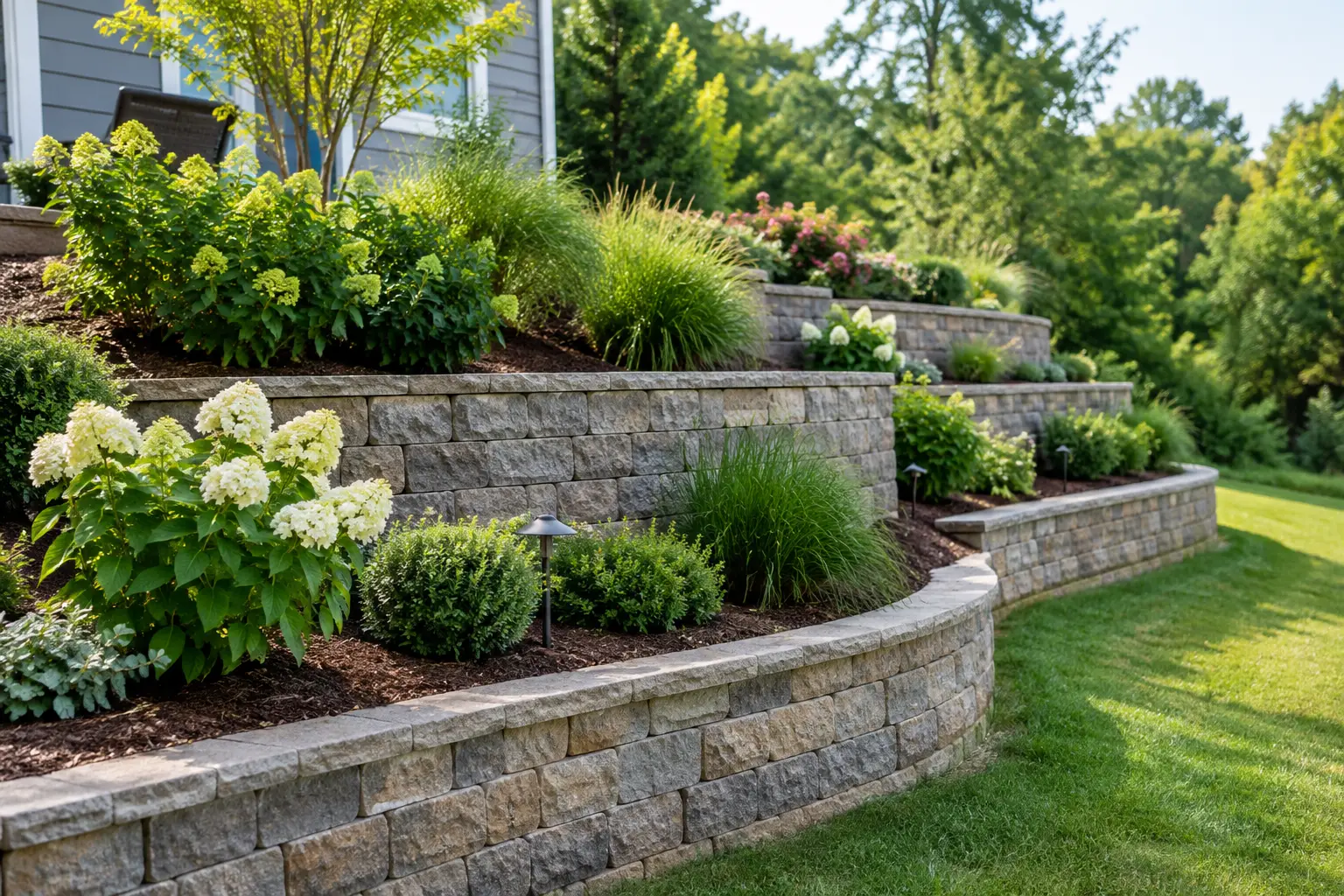
The main advantage is appearance and durability. Stone stands up well to the British climate and can add real value to the overall look of the garden. The trade-off is cost and labour. It is heavier, slower to install, and usually more expensive than simpler options. If the budget allows, though, it often gives one of the best long-term finishes.
Concrete kerbs and edgings
For strength and clean lines, concrete is hard to ignore. It is a practical option around drives, pathways, and modern gardens where you want a crisp separation between surfaces. Precast concrete edgings are especially useful where there is regular foot traffic or where gravel and paving need to stay firmly contained.
Concrete is not always the warmest-looking material, so it does not suit every garden. Still, for durability and low maintenance, it performs well. It can also be a sensible choice for landlords and commercial properties where longevity and tidy presentation matter more than decorative detail.
Metal edging
Metal edging has become more popular in recent years because it gives a very clean, understated finish. It is often used in contemporary gardens to separate lawn from gravel, bark, or planted areas without creating a bulky border.
Steel and aluminium are the usual options. They are slim, neat, and effective for creating curves as well as straight lines. The big plus is appearance – it almost disappears while still doing the job. The downside is that lower-quality products can bend or corrode, and some types are not ideal where children are playing unless they are installed and finished properly. Good metal edging looks smart, but quality matters.
Timber edging
Timber is popular because it is affordable, versatile, and easy to work with. It suits informal gardens well and can be used for everything from simple border rolls to sleepers for raised beds.
If you want a softer, more natural look, timber can be a good fit. The issue is lifespan. Even treated timber will not last as long as stone, brick, or concrete, especially in damp ground. In Scotland, where wet conditions are common, timber edging often needs more upkeep and eventual replacement. It is a reasonable short to medium-term option, but not usually the best if you want something fit-and-forget.
Plastic edging
Plastic edging is one of the cheapest ways to create separation between lawn and border. It is lightweight, quick to install, and useful for simple shapes. For basic garden organisation on a tight budget, it can do a job.
That said, it is rarely the strongest or smartest-looking option. In cheaper forms, it can become brittle, lift out of the ground, or look tired quite quickly. It tends to be best for low-cost, light-duty edging rather than premium landscaping work. If appearance and durability matter, most homeowners end up preferring a more substantial material.
Paving setts and cobbles
If you already have block paving, a patio, or a traditional driveway, setts and cobbles can be one of the best garden edging materials for keeping the whole design consistent. They create a strong border, add character, and are tough enough for areas that see regular use.
They are especially effective where garden edging needs to connect visually with hard landscaping. The finish feels intentional rather than added as an afterthought. Installation needs care, though, because uneven laying will stand out quickly. It is a strong option where quality workmanship matters.
Natural trench edging
Not every edge needs a physical material. A simple cut trench between lawn and border can look smart in the right garden, particularly if you prefer a softer, less built-up look.
This works best in well-kept gardens where the edge can be maintained regularly. It is inexpensive and visually clean, but it does take ongoing attention. If left alone, grass will creep and the definition will fade. For homeowners who want very low maintenance, trench edging is usually not enough on its own.
Reclaimed materials
There is also a place for reclaimed brick, stone, or timber if you want character and are trying to make the budget work harder. Reclaimed materials can add charm and help older gardens keep a more established feel.
The benefit is individuality. The challenge is consistency. Sizes, colours, and condition can vary, which may complicate installation. When used well, reclaimed edging can look excellent, but it usually needs a bit more planning than buying new materials off the shelf.
Best garden edging materials for different uses
If you are edging a lawn, brick, metal, and stone are all strong choices because they create clear separation and make maintenance easier. For gravel paths, concrete, metal, and setts tend to hold the line better and stop migration. For raised beds, timber sleepers, brick, and stone are usually more suitable because they can cope with retained soil.
For a modern garden, metal and concrete often give the sharpest result. For a more traditional property, brick, stone, or cobbles usually sit more naturally. If budget is the main concern, timber and plastic can help keep initial costs down, but they may not offer the same lifespan.
That is often the key point people miss. A cheaper edging material can cost less upfront but more over time if it needs repaired or replaced. A more durable option may be better value if you want the garden finished properly and left to last.
Installation matters as much as the material
Even the best edging material can fail if it is badly installed. Poor levels, weak foundations, and rushed finishing will show up quickly, especially after heavy rain and frost. In many gardens, the edging is what keeps the whole layout looking neat, so movement and gaps become noticeable fast.
This is why the surrounding work matters too. If the lawn level is wrong, the drainage is poor, or the border has not been prepared properly, the edging will not perform as it should. For larger projects, it makes sense to look at the garden as a whole rather than treat the edge as a separate add-on.
For homeowners across North Lanarkshire and the wider Central Scotland area, that often means choosing materials that can handle wet conditions and regular use without becoming a maintenance problem. A smart finish is important, but so is getting something that stands up to the climate.
How to choose with confidence
If you want edging that lasts and adds value to the garden, start by thinking about the wider space. Look at the house style, the existing paving or driveway, how much upkeep you are happy with, and how much wear the area gets.
Then be honest about priorities. If cost comes first, there are budget-friendly options. If appearance and lifespan matter more, brick, stone, setts, or quality metal usually justify the spend. If you want a clean result that ties into other landscaping work, it helps to plan edging as part of the full job rather than as a final extra.
The best choice is the one that suits your garden in real life, not just in a photo. A well-chosen edge should make the whole space easier to maintain, better to look at, and properly finished for years to come.