A lawn that stays soft for days after rain, puddles beside the patio, or water running towards the house are not just frustrating garden problems. They can point to a drainage issue below the surface. If you are asking, “do I need garden drainage?”, the answer depends on where the water collects, how long it remains there, and what it could damage.
In Central Scotland, regular rainfall and heavy ground can expose weak drainage quickly. A garden does not need to be bone dry after every shower, but it should recover in a reasonable time and allow water to move safely away from buildings, paths and usable outdoor areas.
Signs Your Garden May Need Drainage
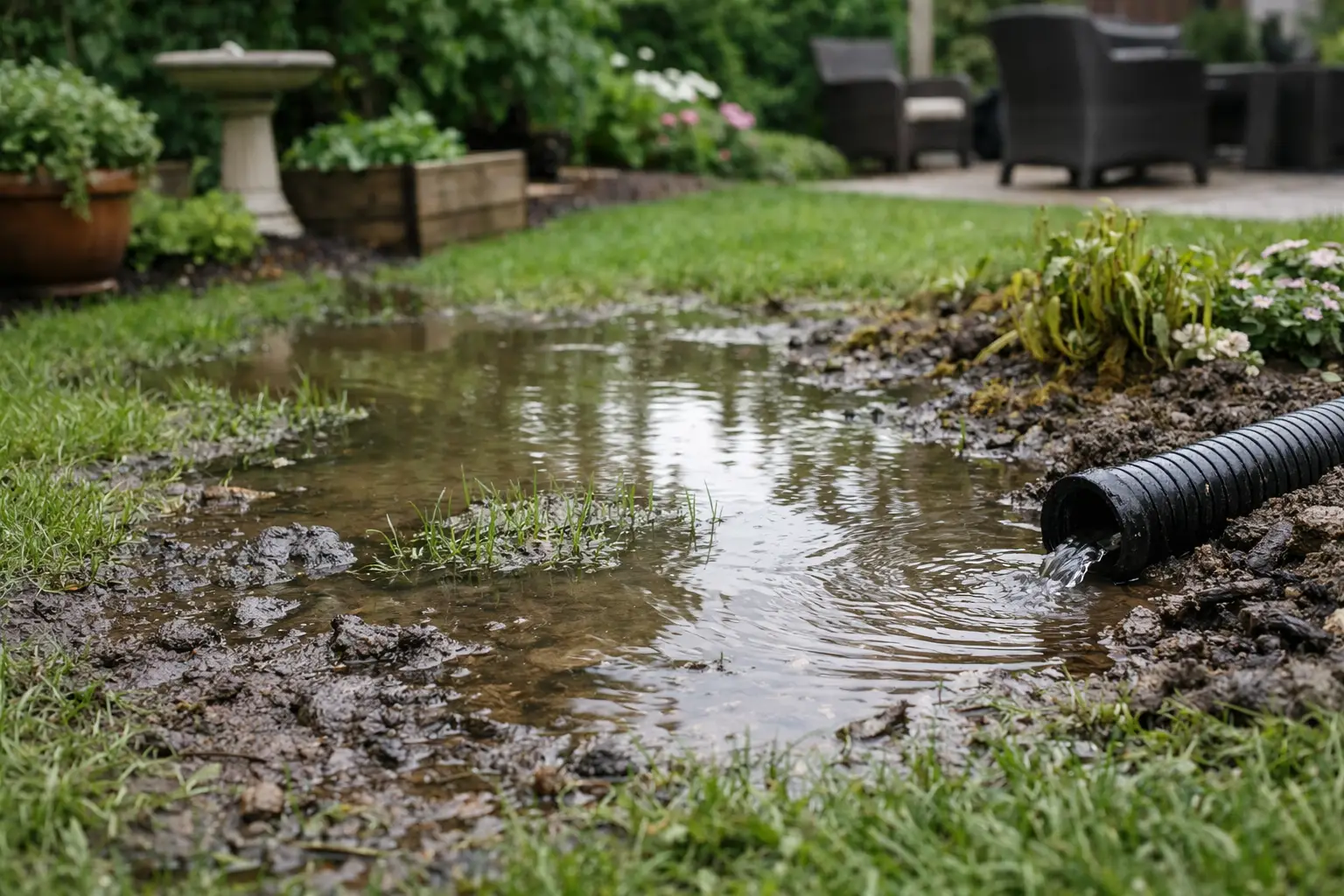
The clearest sign is standing water that remains for more than a day or two after normal rainfall. Small puddles on a compacted path are one thing. Large areas of waterlogged turf, saturated borders or water sitting against a wall are another.
A lawn can also show the problem before visible puddles appear. If it feels spongy underfoot, develops bare patches, or becomes muddy every time it is used, the soil may be holding more water than it can release. Moss often thrives in these damp conditions too, although shade, poor grass growth and compacted soil can contribute as well.
Look closely at patios, driveways and paths. Water should not regularly pool along edges, settle at door thresholds or flow back towards the property. Over time, repeated saturation can stain paving, encourage slippery algae, weaken joints and contribute to movement in poorly prepared surfaces.
Other warning signs include damp at the base of external walls, overflowing gullies, soil washing from beds, and fence posts that rot earlier than expected. None of these automatically proves the garden needs a new drainage system, but together they are worth investigating before a minor issue becomes more costly groundwork.
Do I Need Garden Drainage or Better Ground Levels?
Drainage is not always the first answer. In many gardens, the real issue is that the ground has been laid to the wrong levels. A patio, driveway or lawn that slopes towards the property will direct rainwater exactly where it should not go, even if the soil drains reasonably well.
The aim is to create a controlled fall away from buildings and towards a suitable drainage point. This may involve regrading the garden, adjusting paving levels, installing an edge channel, or creating a gentle route for surface water to reach a soakaway. The right solution depends on the layout and available ground, not just the wettest spot.
Compaction is another common cause. Heavy foot traffic, machinery, repeated parking or years of settled ground can squeeze the air spaces from soil. Water then struggles to soak through it. Aerating a lawn may help a lightly compacted area, but badly compacted clay ground or a garden filled over old construction material may need more substantial preparation.
It is also worth checking simple causes first. Blocked gullies, damaged downpipes and overflowing roof drainage can send a surprising volume of water into one part of the garden. Correcting these issues may reduce the pressure on the rest of the site.
The Main Types of Garden Drainage
A practical drainage design deals with the type of water causing the issue. Surface water running over paving needs a different approach from water trapped beneath a lawn.
French Drains for Wet Lawns and Borders
A French drain is a gravel-filled trench containing a perforated pipe. Water enters through the gravel, flows into the pipe and is carried towards a suitable outlet or soakaway. It can be effective along the edge of a lawn, beside a retaining area or where water repeatedly gathers in a low section of the garden.
This type of drainage is usually hidden once installed, which makes it a useful option where appearance matters. However, it must be correctly graded and have somewhere safe for the collected water to go. A drain that simply transfers water to another already-saturated corner will not solve the problem.
Channel Drains Around Patios and Driveways
Channel drains are narrow surface channels, normally fitted along a patio edge, garage entrance or driveway. They collect water before it reaches the building or creates a large puddle on the hardstanding.
They are particularly useful when installing new paving or a driveway because the falls, channels and outlets can be planned as part of the groundwork. Retrofitting is possible, but it often means cutting into existing surfaces and making good afterwards.
Soakaways for Dispersing Surface Water
A soakaway allows water to discharge into the ground gradually. It may be formed with clean stone or purpose-made crates, depending on the size of the area and site conditions. Soakaways can work well where the ground is free-draining and there is enough space away from buildings.
They are less suitable in very heavy clay or where the water table is high. This is why a site assessment matters. Installing a soakaway in unsuitable ground can leave you with an expensive hole that fills and stays full.
Land Drains and Groundwater Control
Where water rises through the soil rather than simply running across the surface, land drains may be needed. These are more involved systems designed to intercept water below ground level. They are often considered during larger garden clearance, excavation or landscaping work, especially on sloping or persistently wet sites.
When Poor Drainage Can Cause Bigger Problems
A wet patch at the bottom of the lawn may feel like a cosmetic problem, but poor drainage can affect how the entire garden performs. Grass roots need oxygen as well as water. When soil remains saturated, lawns become thin, muddy and difficult to maintain. Plants can struggle, particularly those that dislike wet roots, while pests and disease can become more likely.
Hard landscaping is affected too. Water beneath patios and paths can soften the sub-base or expose weaknesses in the installation. Freeze and thaw cycles can then make movement more noticeable. Good drainage does not replace proper foundations and sub-base preparation, but it helps protect that work for the long term.
The priority changes if water is reaching the house, garage or outbuilding. Water should always be directed away from structures. Persistent damp near a property deserves prompt professional assessment, particularly where the source is unclear or drainage changes may affect neighbouring land.
Can You Fix Garden Drainage Yourself?
Some small improvements are reasonable for a capable homeowner. Clearing leaves and silt from gullies, extending a downpipe to a suitable drainage point, and aerating a lawn can all help where the problem is limited. Adding organic matter to beds may improve soil structure over time, although it will not correct poor levels or a blocked outlet.
Be cautious about digging trenches without a clear plan. Drainage needs correct depths, falls, materials and discharge points. You also need to avoid existing utilities, protect nearby foundations and consider where water will go during a heavy downpour rather than only on a dry day.
For a new patio, driveway, artificial grass area or complete garden transformation, drainage should be considered before surfaces are installed. Doing it at the groundwork stage is generally tidier, more effective and less disruptive than lifting finished work later.
What a Professional Drainage Assessment Should Consider
A proper assessment starts with the whole garden, not only the puddle. The slope of the land, soil type, existing gullies, roof runoff, nearby walls, planned paving and the condition of current surfaces all influence the best option.
A contractor should also consider access for excavation and whether the work can be combined with other improvements. For example, if an old lawn is being removed for a patio and new turf, it may be the right time to correct levels and install drainage beneath the finished garden. This avoids duplicate labour and helps deliver a cleaner result.
North Lanarkshire Garden Care can assess drainage as part of wider landscaping, excavation, driveway or patio work, helping homeowners choose a solution that suits the site rather than adding unnecessary work.
A garden should be enjoyable after rain, not left out of bounds for a week. If water keeps returning to the same place, address the route it takes through the garden before investing in new surfaces, planting or turf. The right groundwork can make every other improvement last and look better.