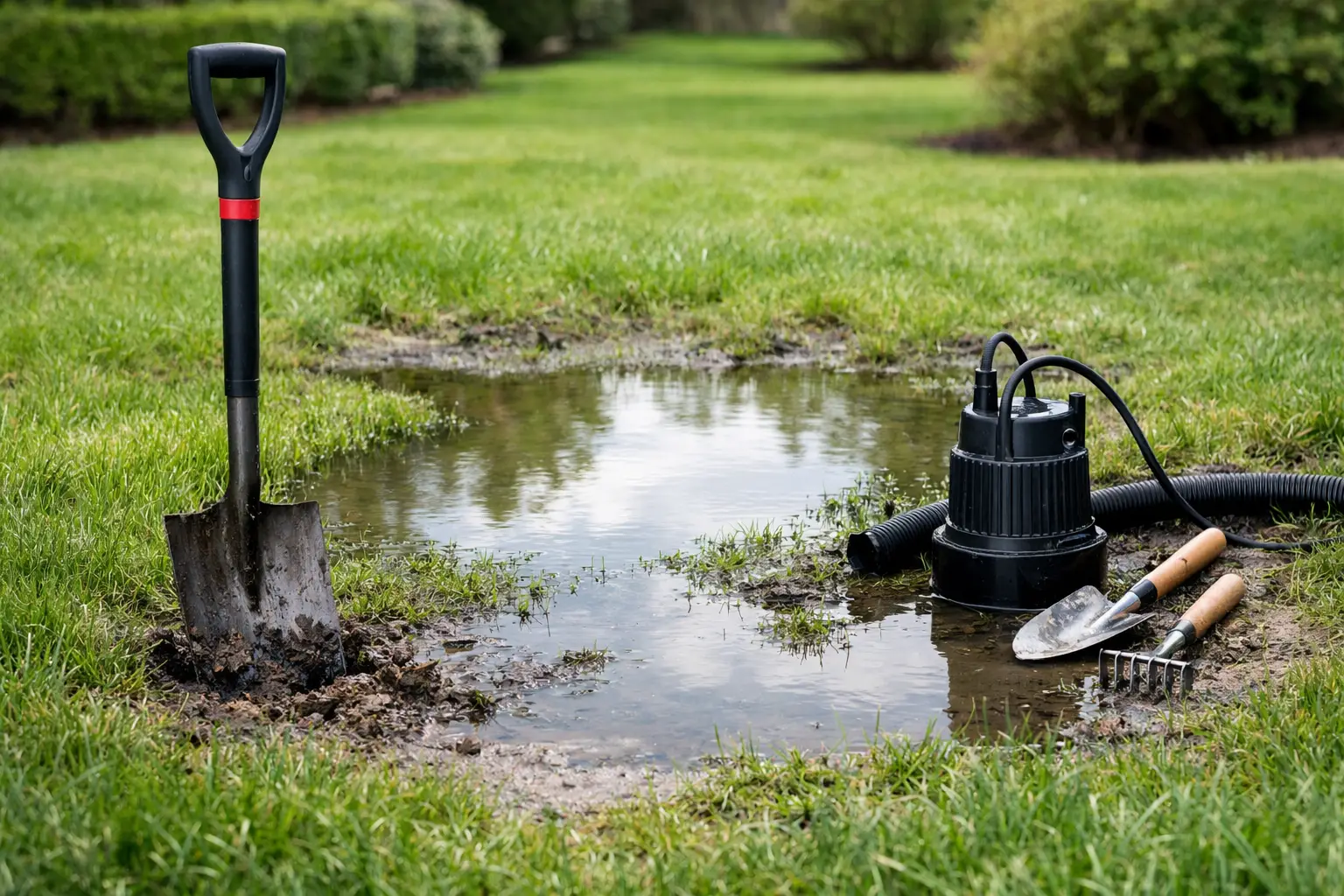
A lawn that squelches underfoot after every spell of rain is more than a nuisance. If you are wondering how to fix waterlogged lawn areas, the right approach depends on why the water is sitting there in the first place. In some gardens it is a simple compaction issue. In others, the problem runs deeper and needs proper drainage or groundwork.
The first thing to know is that a waterlogged lawn rarely fixes itself. Grass roots need air as well as water, and once the soil stays saturated for too long, the lawn starts to thin out, yellow, and turn patchy. In busy family gardens, the damage gets worse fast because foot traffic presses the soil tighter and traps water for longer.
Why lawns become waterlogged
Most soggy lawns come down to one of three things – poor drainage, compacted soil, or low spots where water naturally gathers. Sometimes it is a combination of all three. Heavy clay soil is a common culprit across many parts of Central Scotland because it drains slowly at the best of times, and after steady rainfall it can hold water for days.
Compaction is another major cause. If the lawn has regular foot traffic, kids playing on it, pets running over it, or garden machinery crossing it, the soil particles get pressed together. That leaves less space for water and air to move through. The result is standing water on the surface and weak grass underneath.
Then there is the wider layout of the garden. If patios, driveways, sheds, retaining edges, or neighbouring ground levels direct water towards the lawn, the problem may not be the grass at all. The lawn is simply where the water ends up.
Signs your lawn needs more than a quick fix
If water disappears within a day after heavy rain, the issue may be manageable with basic lawn care. If puddles sit for several days, or the ground stays soft and boggy for long periods, you are likely dealing with a more serious drainage problem.
Other signs include moss taking over, grass thinning in patches, muddy areas through winter, and water pooling in the same places every time it rains. If the lawn feels uneven underfoot, those dips may be acting like shallow basins. A lawn can also struggle if there is a hard layer under the topsoil, which stops water draining down naturally.
How to fix waterlogged lawn areas step by step
The best fix starts with a proper look at the cause. If you treat the symptom but ignore the reason water is collecting, the problem usually returns.
Start by reducing traffic
If the lawn is already saturated, keep people off it as much as possible. Walking on wet ground makes compaction worse and can tear the grass. This does not solve the problem, but it stops extra damage while you sort it.
Aerate compacted soil
For many lawns, aeration is the most effective first step. This means creating holes in the soil so water, air, and nutrients can move down to the roots. On mildly compacted lawns, a garden fork can help. Push it in every few inches and gently rock it to open the soil. On larger or more heavily compacted areas, a hollow tine aerator does a better job because it removes small plugs of soil rather than just punching holes.
Aeration works best when the ground is moist but not saturated. If the lawn is waterlogged to the point of being muddy, wait until it has dried slightly. Otherwise you can do more harm than good.
Top dress with sand and compost – carefully
After aeration, a top dressing can improve the soil structure over time. A mix of sharp sand, compost, and topsoil is often better than sand alone. Pure sand can cause problems in clay-heavy ground if it is not part of a balanced mix. Brush the dressing into the aeration holes and spread a light layer across the lawn.
This is not an instant cure, but it can make a noticeable difference when repeated over time. It is most useful where the lawn suffers from moderate drainage issues rather than severe pooling.
Regrade shallow dips
If water gathers in specific hollows, levelling those low spots can help. Small depressions can be corrected by lifting the turf, adding screened topsoil underneath, and relaying it. For minor unevenness, repeated light top dressing may be enough.
Where the garden has larger level issues, patching one dip at a time may not be worth it. In those cases, a more complete lawn regrading job often gives a better result and stops the same problem appearing in new spots.
When drainage is the real answer
Sometimes the only lasting fix is to install proper drainage. This is usually the case if the lawn sits at the bottom of a slope, the soil is very heavy, or water remains on the surface long after rain has stopped.
French drains and land drains
A French drain is a gravel-filled trench, usually with a perforated pipe, designed to collect and move water away from problem areas. A land drain works on a similar principle. These systems are often the best option when surface water needs a clear route out of the lawn.
The exact layout matters. A drain has to fall correctly, discharge safely, and tie in with the rest of the garden. Put in badly, it can fail quietly and leave you with the same soggy lawn a few months later.
Soakaways and drainage outlets
If there is nowhere obvious for water to go, a soakaway may be an option, depending on soil type and available space. In some gardens, connecting drainage into a suitable outlet is the better choice. This part is where many homeowners hit a limit with DIY because the wrong solution can be expensive to put right.
How to fix waterlogged lawn problems caused by surrounding surfaces
It is worth checking whether paving, edging, or driveways are channelling runoff straight onto the grass. Even a well-built lawn will struggle if every hard surface in the garden drains into it. In those cases, adjusting falls, adding drainage channels, or changing the surrounding layout may be part of the fix.
Seasonal timing matters
Spring and early autumn are usually the best times to carry out lawn repairs. The soil is workable, the grass is actively growing, and there is enough warmth for recovery. Mid-winter is rarely ideal unless you are tackling urgent drainage works rather than trying to restore the turf itself.
Summer can work for drainage installation, but turf repairs need more aftercare if the weather turns hot and dry. That said, if your lawn floods badly every winter, waiting too long can mean another season of damage.
What not to do with a waterlogged lawn
A few common mistakes make the problem worse. One is adding too much sand without understanding the soil below. Another is seeding over boggy patches before drainage is sorted. Fresh grass will not establish properly if the roots are sitting in wet ground.
It is also tempting to keep mowing because the lawn looks untidy, but cutting saturated grass can smear the soil, leave ruts, and stress already weak turf. Wait until the surface has firmed up.
DIY or professional help?
If the issue is light compaction or a few shallow dips, a DIY approach can be enough. Aeration, top dressing, and small levelling jobs are manageable for many homeowners if done at the right time and with a bit of patience.
If the lawn stays waterlogged for days, if there are signs of drainage failure across the wider garden, or if levels need changed properly, professional help is usually the smarter route. Groundworks, excavation, and drainage need to be planned as part of the whole outdoor space, not treated as an isolated patch repair.
That is often where a full-service contractor makes life easier. If the lawn issue is linked to patios, paving, surface runoff, poor grading, or old garden layout problems, it helps to have one team able to deal with drainage and landscaping together rather than passing the job between different trades.
A better result starts below the surface
The biggest mistake with a soggy lawn is focusing only on the grass. Healthy turf depends on what is happening underneath. If the soil is compacted, the levels are wrong, or there is nowhere for water to drain, no amount of feeding or reseeding will solve it for long.
A good lawn should drain well, feel firm underfoot, and recover properly after rain. If yours does not, treat the cause early. Small drainage improvements can save a lot of money and disruption later, and where the problem is more serious, getting it sorted properly gives you a garden you can actually use again.