A good patio changes how a garden gets used. It can turn a patch of unused ground into a spot for morning coffee, family meals, or simply somewhere clean and level to sit after the rain. If you are looking for patio paving ideas for garden spaces, the best starting point is not colour or pattern – it is how you want the area to work day to day.
That matters because a patio that looks smart but feels awkward soon becomes wasted space. A large entertaining area may suit one household, while a smaller seating corner beside the lawn makes more sense for another. The right paving choice needs to balance appearance, drainage, maintenance, budget, and the shape of the garden.
How to choose patio paving ideas for garden layouts
Before choosing materials, think about position and size. In many gardens, the patio sits directly outside the back door, which is practical for access and outdoor dining. In others, it works better as a separate feature further into the garden, especially if you want to catch the evening sun or create a quieter seating area away from the house.
Shape also makes a difference. Straight edges and square layouts usually suit modern homes and keep installation costs more predictable. Curved edges can soften the look of a garden, but they often involve more cutting and more labour. If your garden is small, keeping the layout simple can help the space feel bigger rather than broken up.
You also need to think about levels. A patio should not just be laid flat and forgotten. It needs the correct fall so surface water drains away properly, particularly in Scottish weather where heavy rain quickly shows up poor groundwork. This is often the difference between paving that lasts and paving that starts shifting, staining, or holding puddles.
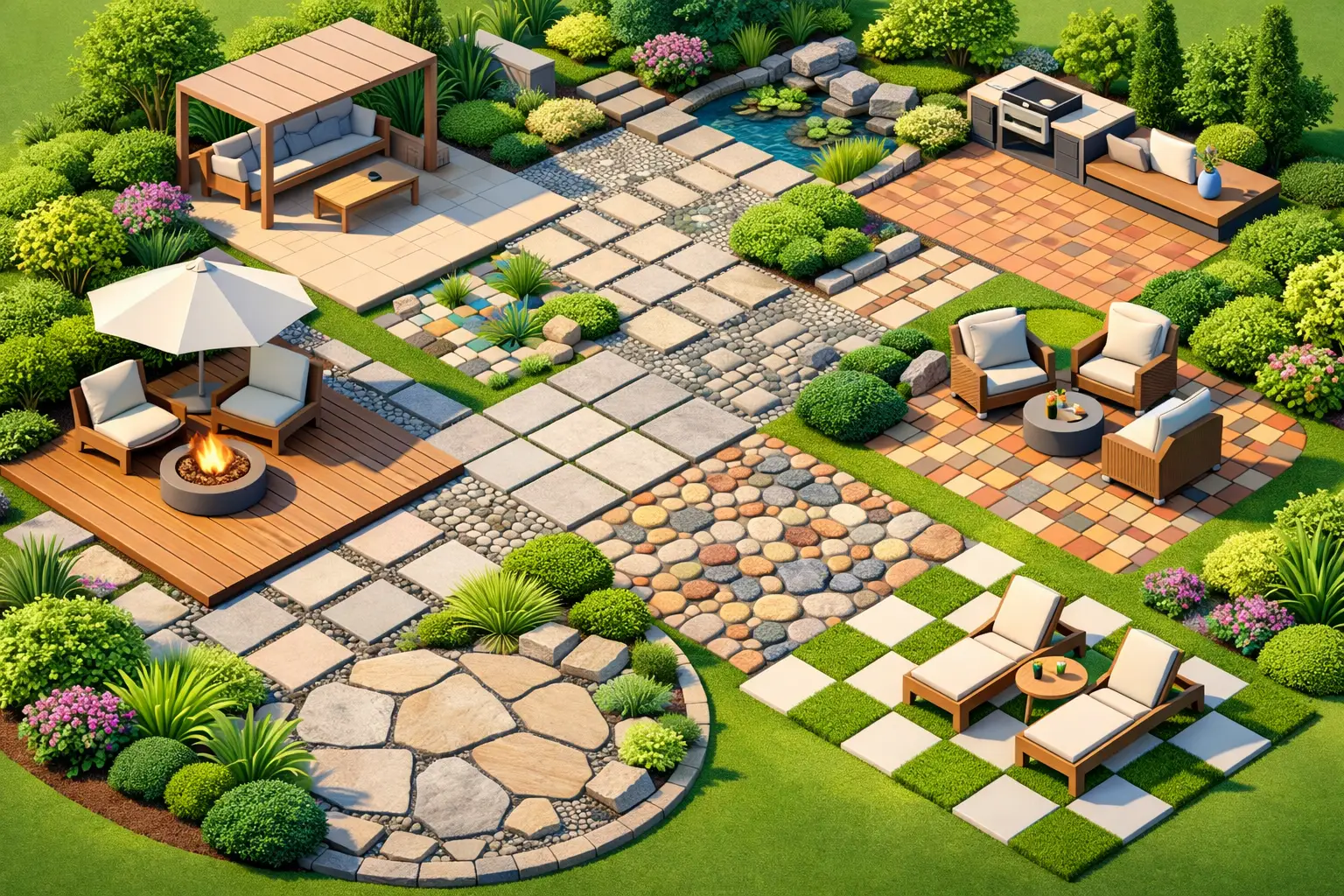
Popular patio paving ideas for garden projects
Porcelain paving for a clean modern finish
Porcelain is one of the most popular choices for homeowners who want a neat, contemporary look. It has a consistent finish, comes in a wide range of colours, and is generally low maintenance. Greys, beige tones, and stone-effect designs work especially well if you want a smart patio that pairs well with modern fencing, rendered walls, or artificial grass.
The main advantage is appearance and easy cleaning. The trade-off is that porcelain needs careful installation on a properly prepared base. It can also cost more upfront than some concrete products. If the fitting is poor, even expensive slabs will not perform well, so workmanship matters just as much as the material.
Natural sandstone for character and warmth
Sandstone remains a strong choice for traditional gardens and period properties. It has more variation in tone than porcelain, which gives it a softer and more natural look. For many people, that slight variation is exactly the appeal. It helps the patio feel settled into the garden rather than too sharp or manufactured.
It does need a bit more ongoing care, particularly if you want to keep the original finish looking fresh. Some stones weather beautifully, while others mark more easily depending on use and surrounding trees. If you like a lived-in look, sandstone often improves with age. If you want a perfectly uniform finish all year round, porcelain may be the better fit.
Concrete slabs for a practical budget-friendly option
Concrete paving has improved a lot over the years. It is no longer limited to plain, basic flags unless that is the look you want. There are plenty of textured and riven options that give a more attractive finish without pushing the budget too far.
This is often a sensible option for larger patios where cost per square metre matters. It can also work well in rental properties or commercial outdoor spaces where durability and value are more important than premium materials. The key is choosing a slab that suits the property rather than opting for the cheapest product available.
Block paving for pattern and definition
Block paving is often associated with driveways, but it can work very well in gardens too. It gives you flexibility with laying patterns, border details, and curved edges. If you want a patio that links visually with a block paved driveway or path, this can create a tidy and coordinated finish across the whole exterior.
It is a good choice where you want stronger definition between areas, such as a patio beside raised planters or steps. The downside is that joints can need more attention over time, and poor installation can lead to movement. A well-prepared base is essential.
Mixed materials for a more designed look
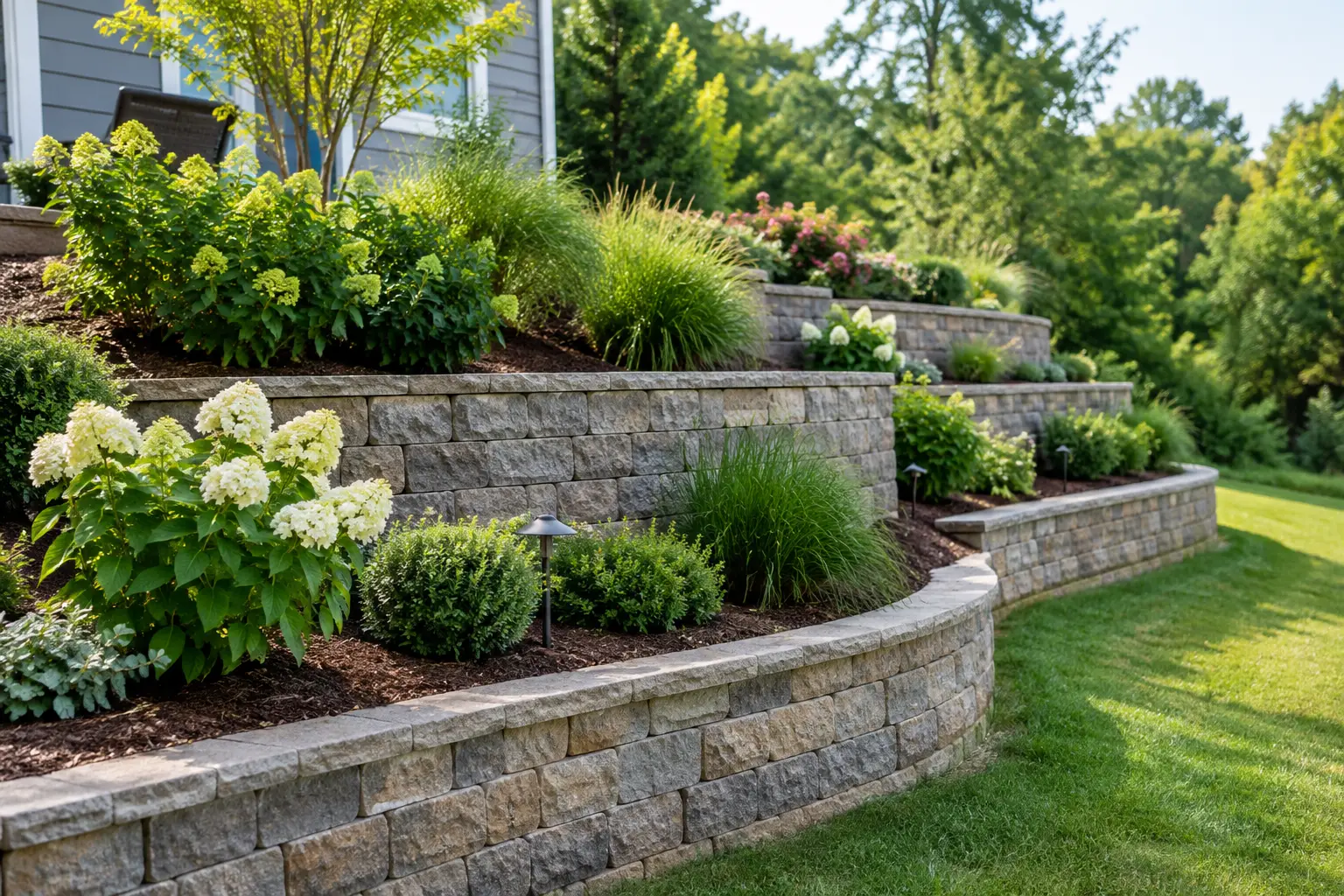
Not every patio needs to be made from one material alone. Combining paving with gravel borders, brick edging, sleeper planters, or small retaining walls can make the space look more finished without overcomplicating it. This approach works particularly well if your garden has different levels or awkward corners.
For example, a main paved seating area with a gravel strip around the edge can improve drainage and create a softer border against fences or planting. A contrasting edge detail can also make a standard patio feel more bespoke.
Matching paving to the way you use the garden
A patio should suit real life, not just a photo. If you regularly bring bins through the garden, move garden furniture about, or have children using the space, practicality matters. Smooth paving may look smart, but it can show dirt more quickly. Textured paving can offer more grip, but some finishes are harder to sweep clean.
Dining areas usually need more room than people expect. Once you add a table, chairs, and space to pull seats out comfortably, a patio can start to feel cramped if it has been sized too tightly. If your main use is a small bistro set and a couple of chairs, a compact paved area may be enough and leave more room for lawn or planting.
For landlords and commercial properties, low maintenance is often the priority. In those cases, durable paving with straightforward lines and easy access can be a better long-term investment than a more decorative finish that needs regular upkeep.
Colour, edging and finishing details
Colour has a big effect on the feel of the garden. Light paving can brighten a shaded area, though it may show marks more easily. Mid-grey and warm buff tones are popular because they sit well with most brickwork and fencing styles. Dark paving can look striking, but in smaller gardens it sometimes makes the space feel more enclosed.
Edging is one of those details that is easy to overlook and difficult to ignore once the job is done. A patio without a clear edge can look unfinished. A contrasting border, brick soldier course, or neat kerb line helps define the area and gives the installation a more professional result.
Jointing also affects the final look. Wide, uneven joints can spoil even premium paving, while clean, consistent lines make simpler materials look better. This is why proper preparation and attention to detail count for so much.
Drainage and groundwork matter more than the slab itself
Many paving problems start below the surface. If the ground has not been excavated properly, compacted correctly, or laid to the right falls, the finished patio may look fine at first and then start failing. Sinking corners, standing water, and loose slabs are common signs of poor groundwork.
In areas with heavy rainfall, drainage should be part of the plan from the start. Depending on the site, that might mean adjusting levels, adding drainage channels, or choosing a layout that moves water safely away from the property. This is especially important if the patio sits close to the house or replaces an old area that already suffers from pooling water.
North Lanarkshire Garden Care often sees projects where the original paving choice was not the real issue – the base and drainage were. Getting that side of the job right gives you a patio that not only looks better on day one, but keeps performing over the years.
A few ideas that work well in smaller gardens
Smaller gardens benefit from restraint. Large-format slabs can make a compact space feel calmer because there are fewer joint lines breaking things up. Keeping the paving colour close to surrounding walls or fencing can also create a more open feel.
If space is tight, built-in planters or a single step detail may work better than lots of separate features. Too many materials and shapes can make a small garden feel busy. A simple patio with one clear purpose usually works best.
That said, small does not need to mean plain. A neat border, a diagonal laying pattern, or a matching path leading to a second seating area can add interest without making the garden feel crowded.
Getting the balance right
The best patio paving ideas for garden projects are the ones that suit the property, the budget, and the way the space is actually used. A modern porcelain terrace, a warm sandstone patio, or a straightforward concrete layout can all be the right choice in the right setting. What matters is getting the design, base preparation, and finish right as a whole.
If you are planning a new patio, think beyond the slab sample. Look at the light, the drainage, the access, and how the area will feel in everyday use. A well-built patio should make the garden easier to enjoy, easier to maintain, and better suited to your home for years to come.