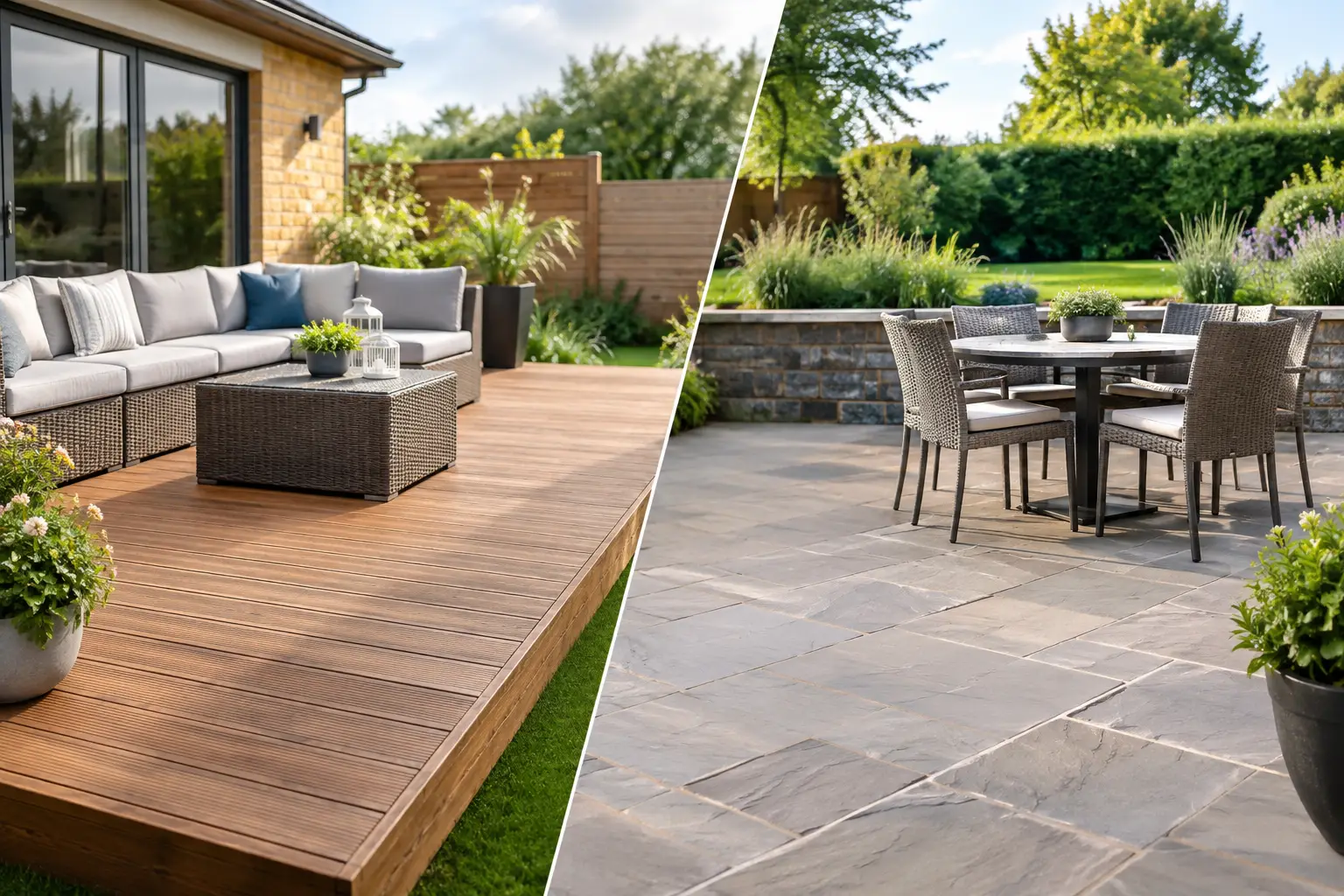

A small garden does not need a small ambition. The best patio layouts for small gardens create enough room to sit, eat and enjoy the space without turning the whole garden into paving. The difference is usually not the size of the patio, but where it sits, how people move around it and how well it connects with the rest of the garden.
For many homes across North Lanarkshire, the most successful result is a practical patio that feels generous, stays easy to maintain and deals properly with Scotland’s wet weather. A clear plan before excavation starts prevents wasted space, awkward steps and expensive changes later on.
Start with how you will use the patio
Before choosing slabs, decide what the patio needs to do. A couple who want a quiet morning coffee area need a very different layout from a family that wants room for a table, barbecue and children’s play space. Trying to fit every possible use into a compact garden can make it feel cramped, so it pays to choose the priority.
Measure the furniture rather than guessing. A small bistro set may only need a modest square or circle, while a four-seat dining table needs space for chairs to be pulled out comfortably. As a guide, leave around 75cm behind chairs where possible. If the available space is tight, built-in bench seating or a bench pushed against a boundary can provide more places to sit without creating an obstacle in the middle of the patio.
Also consider the route from the house. If the patio is for outdoor meals, it should be easy to reach from the kitchen or back door. If it is intended as a sunny retreat, a position further down the garden may be the better choice. There is no single right answer, but the layout must suit how the household actually lives.
Best patio layouts for small gardens
The full-width patio by the house
A full-width patio directly outside the rear doors is one of the most reliable options for a narrow garden. It makes the home and garden feel connected, gives a straightforward place for a dining set and avoids wasting depth on a narrow path along the house.
The trade-off is that it can dominate a very short garden if it is too deep. Keep the depth proportionate to the garden length, then soften the edge with raised planting, a low sleeper bed or pots. A simple rectangular shape often works best here because it follows the building lines and is efficient to install.
This layout is particularly useful where access is limited or where the garden needs re-turfing beyond the patio. The work can be planned as one project, with levels, drainage, paving and lawn all considered together.
The corner patio
A corner patio leaves more of the garden open while still creating a defined seating area. It works well in square gardens and gardens where the sun reaches one side later in the day. Positioning the seating in the far corner can also make a small plot feel longer, as the eye is drawn towards a destination rather than stopping at the first few metres.
Use a clear route to reach it. A path that is too narrow or runs through planting will soon become inconvenient in winter. In a compact garden, the path can double as part of the patio design, using matching paving with a change in laying pattern to show where the seating zone begins.
A corner layout needs a little more thought around privacy. Fencing, trellis, screening plants or a neatly planted border can make the area feel sheltered without blocking daylight. Avoid solid, bulky structures where they would make the corner dark.
The L-shaped patio
An L-shaped patio is a sensible choice where a straight rectangle would either be too large or leave an awkward strip of unused ground. One section can sit outside the doors for day-to-day access, while the other creates space for a table, bench or outdoor cooking area.
This is a practical layout for gardens with extensions, steps or doors in more than one position. It can work around existing features instead of forcing the whole garden into a rigid shape. The key is to keep the inside corner useful. It may be the right place for a planter, a small storage unit or built-in seating, rather than an empty pinch point.
The patio with a central lawn
If you want greenery to remain the main feature, use a smaller patio at the house and retain a simple central lawn. The lawn provides visual breathing room, while borders around the edges add colour and privacy. This arrangement suits families who want a usable grass area but still need a clean, level place for furniture.
Keep lawn shapes simple. Curves can look attractive, but several small curves around a patio often create fiddly edges and increase maintenance. A rectangle, oval or one broad curve is usually easier to mow and looks more deliberate.
The split-level patio
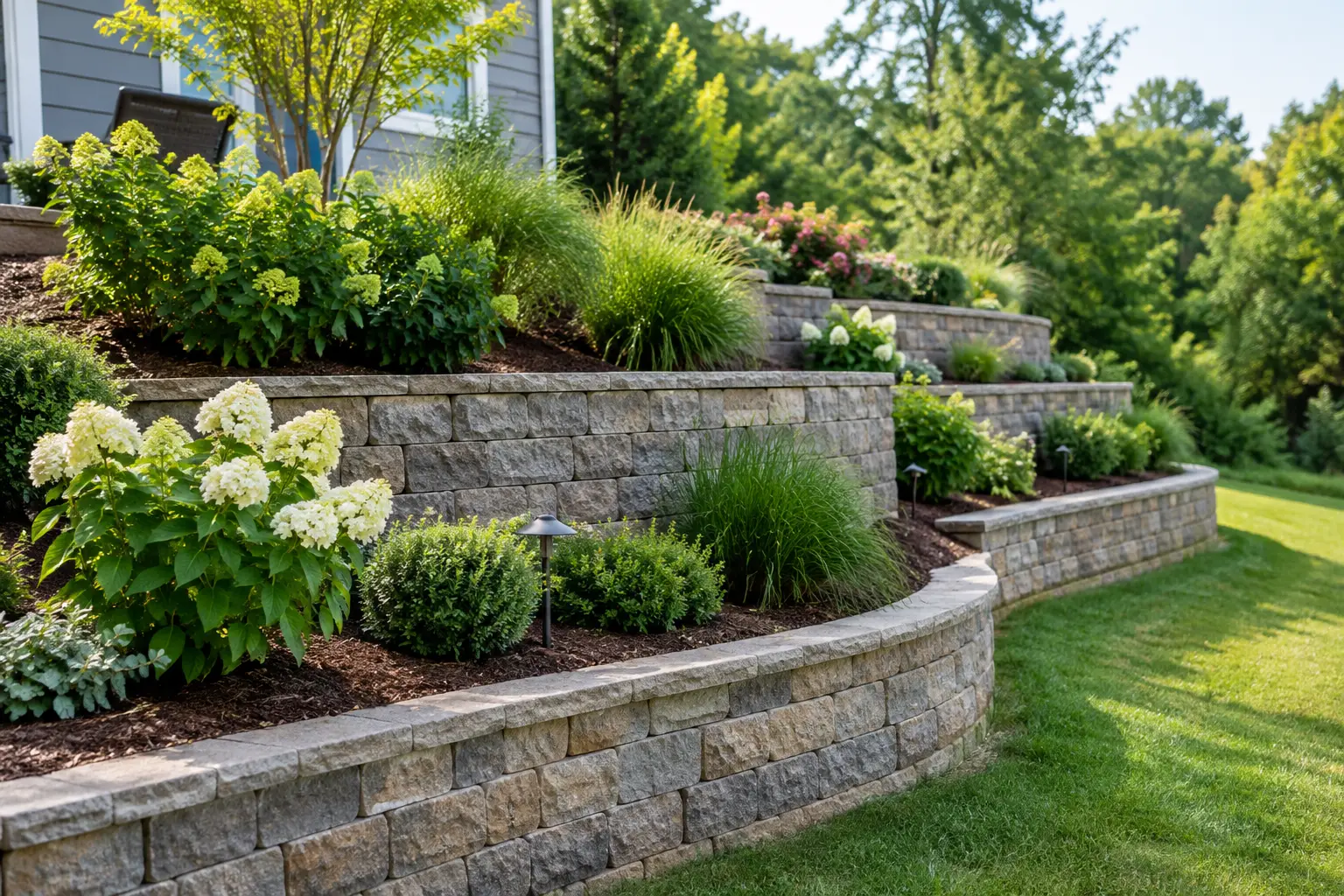
Where a garden slopes away from the house, a split-level design can turn an awkward change in height into separate usable areas. A dining patio near the house might lead down to a lower seating area or lawn, linked by wide, safe steps.
This option can look excellent, but it needs proper groundwork. Retaining edges, foundations, drainage and step heights all need to be planned correctly. It is not usually the cheapest small-garden option, yet it can be worthwhile when levelling the entire garden would require extensive excavation or leave poor drainage behind.
Make the patio feel bigger without adding more paving
Large-format slabs can reduce the number of visible joints and give a small patio a cleaner appearance. That said, very large slabs are not always suitable for every shape or access route. Smaller paving may create less waste around corners and curves, while a carefully selected joint colour can still keep the finished surface looking calm.
Lay paving in the direction you want the garden to feel longer. In a narrow plot, slabs running across the width can visually broaden the space, while a path or plank-style paving running away from the house can add a sense of depth. Avoid mixing too many materials. One main paving choice, repeated in a path or step detail, usually looks smarter than several competing finishes.
Furniture matters just as much as paving. Choose pieces with slim legs, foldable chairs or benches that can tuck against a wall. Keep the centre of the patio open where possible. A patio full of oversized furniture may technically offer plenty of seating, but it will not be comfortable to use.
Planting should frame the area rather than swallow it. Tall, narrow climbers and upright shrubs can add privacy at the boundaries, while lower planting keeps sightlines open. Raised beds are useful when the soil is poor or when you want clear edges, although they should not be made so wide that they take away valuable patio room.
Do not overlook levels and drainage
A good-looking patio that holds water is not a good patio. The finished surface needs a suitable fall so rainwater drains away from the property, and the levels must work with door thresholds, existing gullies and surrounding ground. In some gardens, drainage channels or additional drainage work may be needed before paving is installed.
This is especially relevant in older properties, where existing patios may have settled or been laid over unsuitable bases. Simply placing new slabs on top can raise levels too high and hide the real problem. Proper excavation, a stable sub-base and careful compaction give paving the strength to cope with regular use and changing weather.
Think about access for the work as well. If materials need to pass through a house, down a side path or across a shared entrance, the patio design and installation method may need adjusting. A straightforward plan that suits the site is often better value than a more complicated design that creates avoidable labour and waste.
Choose a layout that will still suit you in a few years
The best small patio is not necessarily the most dramatic design on a drawing. It is the one that gives you a dry, level place to use, leaves enough room for planting or lawn, and does not become difficult to maintain. Quality paving, secure edging and sensible drainage will make more difference over time than chasing every garden trend.
If you are considering a new patio alongside fencing, turfing, artificial grass or drainage improvements, plan the whole garden before any work starts. North Lanarkshire Garden Care can assess the space, ground conditions and access, then provide a practical layout that makes the most of every available metre. A well-planned patio gives even the smallest garden a proper place to be enjoyed.